
The key ideas
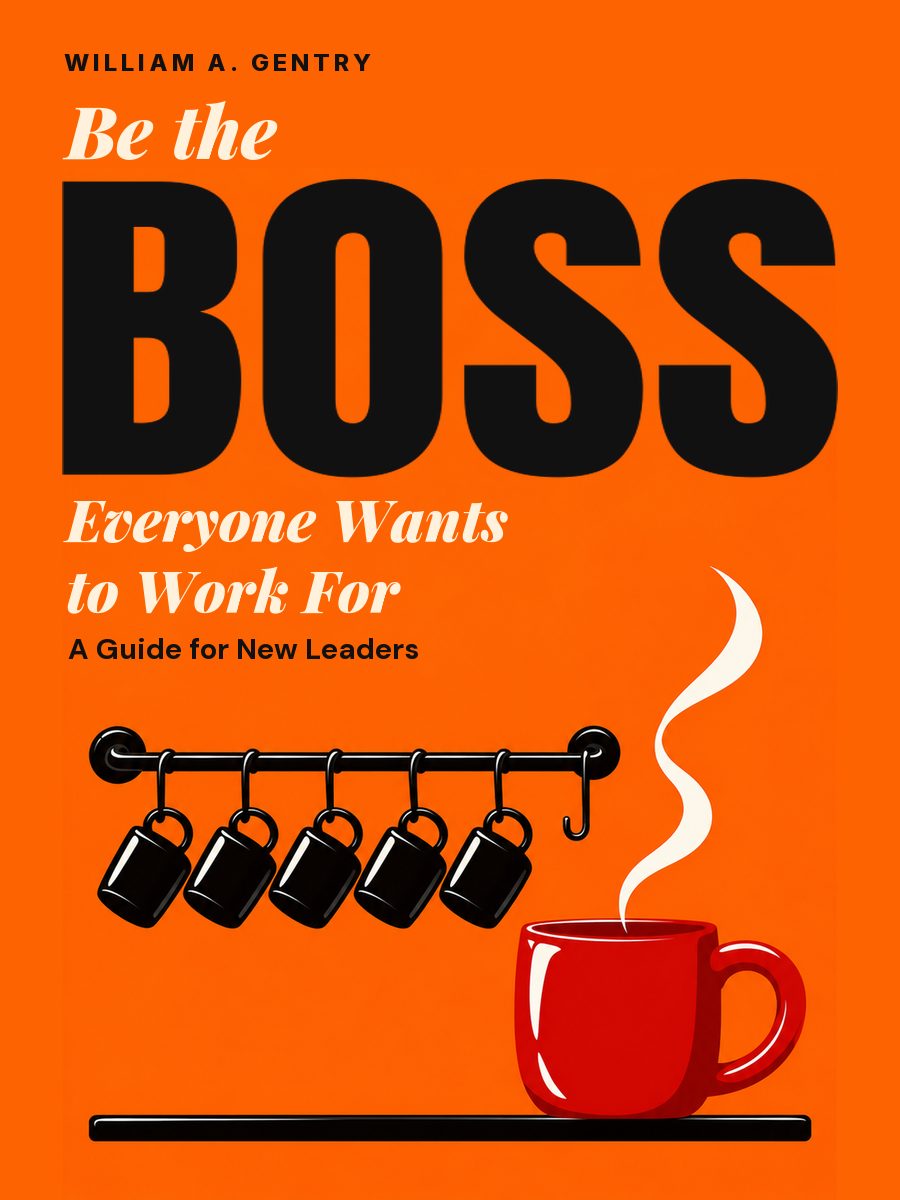
Be the Boss Everyone Wants to Work For: A Guide for New Leaders
On Friday you are the best specialist in your department; on Monday you are its boss, and nobody has explained what to do now. Psychologist William Gentry studied almost 300 new leaders and became one himself while writing this book. He shows why success as an individual contributor gets in the way of leading and what changes when the center of attention is no longer you but your team.
Who it is for
For people who have just been promoted to a leadership role, and for those who have held one for a long time but never received any training.
Do you just expect that Friday I am a regular employee and Monday, magically, I’m a manager?
An employee on Friday, a boss on Monday
Friday, the vice president’s office. William Gentry had come to ask for a raise and laid out all his arguments: he was irreplaceable, and his work brought the company money. He got the raise, but together with an offer to head a department. Gentry asked whether they really expected him to be a regular employee on Friday and, magically, a manager on Monday.
Gentry has worked as a research psychologist for many years, and his organization, the Center for Creative Leadership, trains leaders all over the world. He was already in the new role when he finished this book. The figures he cites are bleak: about 40 percent of newly promoted leaders fail within the first 18 months, and almost 60 percent of new leaders receive no training at all.
The author traces the main reason to the script a strong individual contributor lives by. It fits into the old breakup line: “It’s not you; it’s me.” Everything revolves around “me”: my talent, my effort, my results. A boss, Gentry believes, needs the script flipped: “It’s not about me anymore.”
The psychologist who failed the test for supervisors
The book tells the story of Kurt. He did brilliantly at school, worked harder than anyone during his internship, and was groomed to be a supervisor as soon as he finished his degree. All that was left was to pass a selection test. Kurt failed it: he convincingly showed that he could do the work himself but never explained how he would work with people. He had to leave the organization.
Later Gentry admits that Kurt is him. The test had been put together by psychologists, and he had a degree in organizational psychology and a research topic on leadership.
Researchers at the Center have a term for this outcome, derailment: a promising leader stops growing, is demoted or is fired. One of the reasons sounds like a paradox: strengths turn into weaknesses. Independence helped the individual contributor, but a boss is criticized for that same independence, because a boss now has to get results through other people. Other reasons are simpler: success goes to your head, and weaknesses that used to be forgiven were never fixed.
After that failure, Gentry’s career took off somewhere else. But he warns: without a change of script, a second attempt will end the same way.
About the author
William Gentry is an American psychologist who spent many years at the Center for Creative Leadership researching leaders whose careers derailed. He runs programs for new bosses and has published more than 40 scientific articles.
All books by this author: William A. Gentry
Be the Boss Everyone Wants to Work For: A Guide for New Leaders Quiz
Terms from the book
- feedback
- Yeager
- Tyco
- vice president: A senior executive in a company who is usually in charge of a whole area of the business and reports to the president or CEO.
- Center for Creative Leadership: An American nonprofit organization that researches and trains leaders. Gentry worked there as a researcher and trainer.
- organizational psychology: The branch of psychology that studies people at work: selection, assessment, motivation and leadership. It is Gentry’s own field.
- derailment: A term used in the Center for Creative Leadership’s research: a promising leader stops growing, is demoted or is fired.
- mindchatter: The author’s image, not a scientific term: the inner voice that comments on and judges what we do.
- SBI: The Center for Creative Leadership’s feedback model. The letters stand for situation, behavior, impact.
- board of directors: A body elected by a company’s owners. It appoints the top executives and assesses their work.
- social intelligence: Here: one of the character strengths in Peterson and Seligman’s classification, the ability to understand people’s motives and feelings and adjust your own behavior to the situation.
- Kozlowski: Dennis Kozlowski is a former CEO of the American corporation Tyco International. He was arrested in 2002 and later found guilty of stealing hundreds of millions of dollars from the company.
Similar books
- Blue Ocean Strategy: How to Create Uncontested Market Space and Make the Competition Irrelevant, W. Chan Kim, Renée Mauborgne
- The Book of Five Rings, Miyamoto Musashi
- Buy Back Your Time, Dan Martell
- Buyology: Truth and Lies About Why We Buy, Martin Lindstrom
- The Autobiography of Andrew Carnegie, Andrew Carnegie
- Cyrus Hall McCormick: His Life and Work, Herbert Casson
- Co-opetition, Adam Brandenburger, Barry Nalebuff
- Contagious: Why Things Catch On, Jonah Berger
- Beat the Dealer: A Winning Strategy for the Game of Twenty-One, Edward O. Thorp
- Becoming Supernatural: How Common People Are Doing the Uncommon, Joe Dispenza