
The key ideas
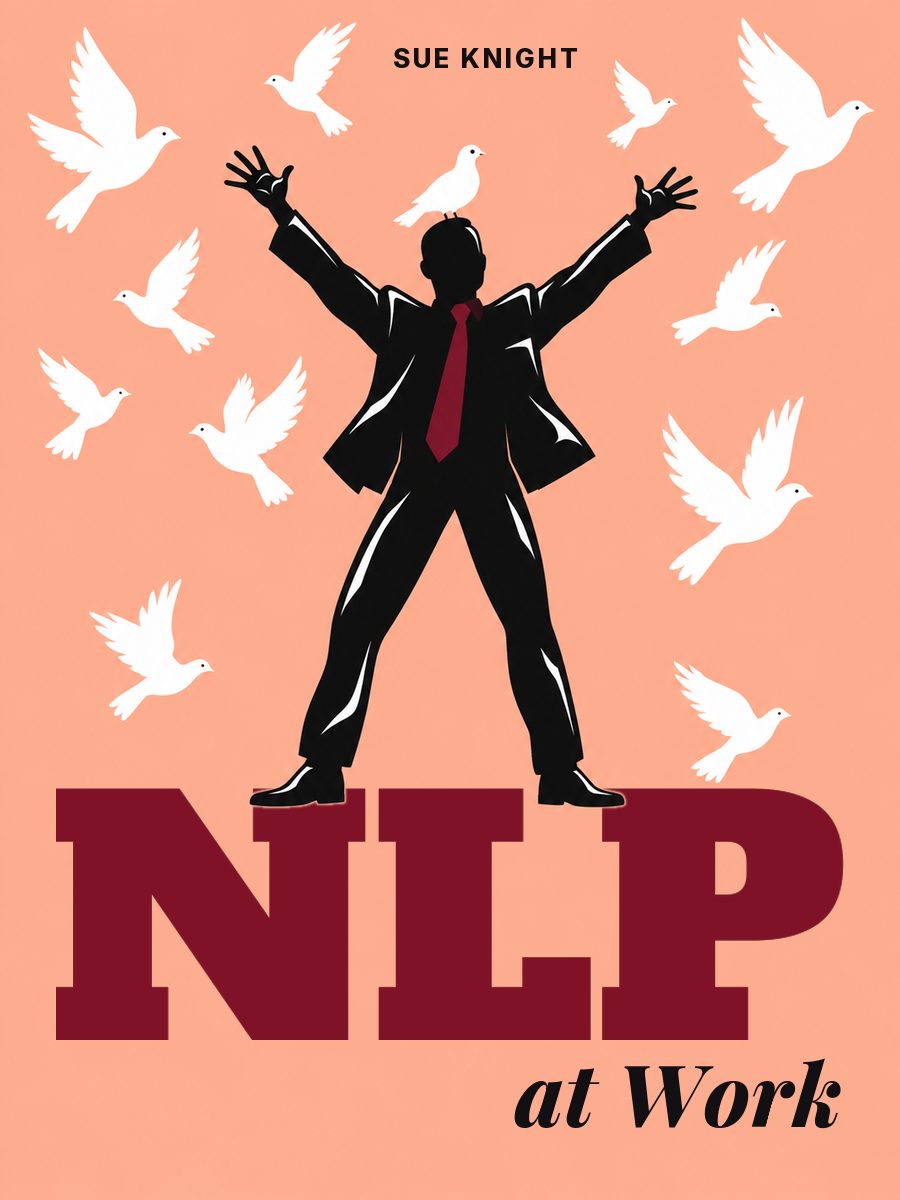
NLP at Work: The Difference That Makes the Difference in Business
Why do some people easily find common ground, while others argue with the same boss for years? Sue Knight, a consultant with thirty years of experience, looks for the answer in small things: the words we scare ourselves with, the questions we don't ask, and the impression we make without even noticing. Her tools come from NLP, and she suggests starting with yourself.
Who it is for
For managers, salespeople, consultants, and everyone who's tired of conversations that go the wrong way.
I have worked with many different companies and have discovered that there is one cause of all the problems: “they.”
The man who looked out the window
Sue Knight once went for a job interview in London. Each time the interviewer asked a question, he swung his chair around and looked out the window. She left with a firm conclusion: “He didn't look at me, he isn't interested in me for this job.” She got the job, and once she joined the department she found out that this was how he concentrated on a conversation.
Knight has been advising companies for more than thirty years, and her book is about how often we react not to people but to our own conclusions about them. Her tool is called NLP, neuro-linguistic programming. It was created by John Grinder and Richard Bandler, who studied what exactly the best specialists do differently from everyone else. Knight calls this looking for the difference that makes the difference.
An important caveat: NLP has never been scientifically confirmed. So everything that follows is Knight's models and her experience as a consultant, not laws of the mind. But her main idea is one you can test on yourself: instead of changing other people, start changing how you think and speak.
Ask how, not why
Cycling with her husband through France, Sue Knight often fell behind him on long climbs. Her pattern went like this: see a hill, tell herself “Oh no, this is going to be a problem,” imagine how hard, get angry with herself and get off the bike.
So she decided to model how her husband climbed. Modeling in NLP means working out exactly how a master gets the result, and then repeating it. At first she just watched: her husband didn't look up at the hill; he looked down and pedaled at a steady rhythm. She tried the same: the climbing got steadier, but it hurt. She had to ask her husband. It turned out he listened to the rhythm of the pedals, told himself “That's good” and took the pain in his legs as a sign that he was getting stronger. In time they reached the tops together, and sometimes she got there first.
This gives Knight her rule: a master can almost never explain their mastery. They do the important things without noticing, and when you ask “Why does it work for you?” they tell you what they think about themselves. Knight advises watching first and then asking the person to go back to that situation in their mind and describe it in the present tense: “What do you see? What are you saying to yourself?” You can model yourself the same way: find where something already works for you and carry it over to where it doesn't yet.
About the author
Sue Knight is a British business trainer and NLP consultant. She started out in IT and then spent more than thirty years helping companies improve their communication, leadership and learning.
All books by this author: Sue Knight
NLP at Work: The Difference That Makes the Difference in Business Quiz
Terms from the book
- James
- Grinder
- Unconscious
- NLP: Neuro-linguistic programming: an approach created in the 1970s. It studies how people think, speak and act in order to copy the techniques of the most successful. It has never been scientifically confirmed; in the book it's the author's working tool.
- Bandler: Richard Bandler, an American author and trainer and one of the founders of NLP, together with John Grinder.
- Modeling: The book's main NLP method: working out exactly how a master gets their result, including what they don't notice themselves, and reproducing it.
- Lazy language: The author's phrase for speech that leaves out details, generalizes from something that happened once, and assumes what others think. For example, “they always do that.”
- Metamessage: The overall impression formed by everything a person or a company does and doesn't do, even though nobody ever says it out loud.
- DeLozier: Judith DeLozier, an American trainer and NLP developer. Together with John Grinder, she described the technique of perceptual positions.
- Perceptual positions: An NLP technique: looking at a situation in turn through your own eyes, through the other person's eyes and through the eyes of an outside observer.
Similar books
- Obviously Awesome, April Dunford
- On War, Carl von Clausewitz
- Only the Paranoid Survive: How to Exploit the Crisis Points That Challenge Every Company and Career, Andrew S. Grove
- Platform Revolution: How Networked Markets Are Transforming the Economy and How to Make Them Work for You, Geoffrey G. Parker, Marshall W. Van Alstyne, Sangeet Paul Choudary
- Pre-Suasion: A Revolutionary Way to Influence and Persuade, Robert Cialdini
- Predictably Irrational: The Hidden Forces That Shape Our Decisions, Dan Ariely
- Principles: Life and Work, Ray Dalio
- The Principles of Scientific Management, Frederick Winslow Taylor
- No More Mr. Nice Guy!, Robert Glover
- Nonviolent Communication: A Language of Life, Marshall B. Rosenberg