
The key ideas
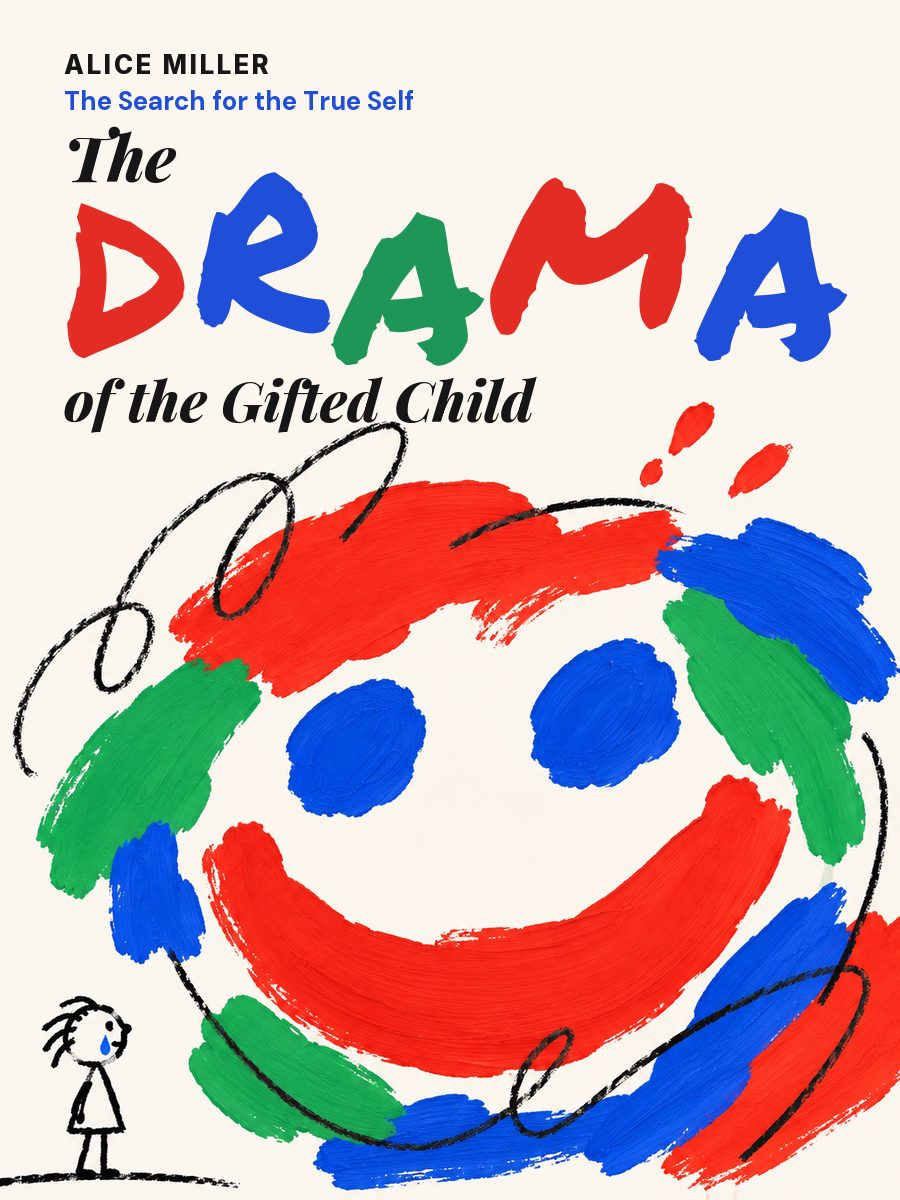
The Drama of the Gifted Child: The Search for the True Self
Why does a person everyone admires find themselves alone with emptiness the moment they stop coming first? Alice Miller listened to such people for twenty years and saw a story they shared: a sensitive child learned early to give their parents what they needed and paid for it with their own feelings. The book explains how this happens, why success doesn’t bring back what was lost, and how a humiliation that was never lived through passes on to the next generation.
Who it is for
For anyone used to being reliable, understanding and successful who still feels an emptiness behind the praise, and for anyone raising children.
How can you love something you do not know, something that has never been loved?
The top student who feels empty
Here is a person who does everything well, often brilliantly. People admire them and envy them, and whatever they take on works out. But the moment they stop coming first, emptiness arrives, along with shame and a sense that life has no meaning. And yet they speak about their childhood with confidence: it was happy, and their parents understood them.
The Swiss psychoanalyst Alice Miller met such people in her practice for twenty years. Almost all of them had been toilet trained before they turned one, and many had already helped look after younger siblings between the ages of eighteen months and five years. Their parents were proud of them. So where does the emptiness come from?
Miller’s answer is this: giftedness here is not a talent for music or math but a rare sensitivity to other people’s feelings. A child with such “antennae” picks up early on what the mother needs and becomes the person she wants to see. In childhood this keeps the mother’s love, and later it can cost the child their self.
Miller later admitted that while working on the book she began to look into her own childhood too. She truly saw her own “happy childhood” only when she started painting in her middle years.
A mother who never had a mirror looks for one in her child
Miller starts from a simple idea. Every child needs to be seen and accepted as they are right now, with their anger, jealousy and fear. She considers this need legitimate, not a whim. By “mother” she means the adult closest to the child; it can also be the father.
The trouble starts when the adult never got that kind of attention in their own childhood. Then they unconsciously look for it in their own child, who is always there, can’t leave and looks up at them. An infant depends completely on its parents and, as Miller writes, turns toward them like a small plant that turns toward the sun.
A sensitive child guesses which role is expected and plays it. The child comforts the mother, gives her advice, takes on the younger children. For this the child is loved and feels needed. Miller stresses that this isn’t about cruel parents. A mother can be educated and caring and sincerely wish her child well, and still look to the child for what she herself was denied in childhood.
About the author
Alice Miller (1923–2010) worked for many years as a psychoanalyst in Switzerland. In 1988 she left the psychoanalytic associations because, in her words, psychoanalytic theory hides the truth about the abuse of children.
All books by this author: Alice Miller
The Drama of the Gifted Child: The Search for the True Self Quiz
Terms from the book
- grandiosity
- psychoanalyst
- Winnicott
- false self
- depression
- psychoanalysis
- giftedness: In this book, not a talent for science or art but a child’s special sensitivity to the feelings and needs of adults. This is how the author understands the word.
- true self: In the book: a person’s own feelings, wishes and impulses, which had to be hidden in childhood, sometimes even from themselves.
- Maja: One of Miller’s patients. As a child she raised the younger children while her mother built a career.
- mourning: In the book: the ability to live through sadness about what was missing in childhood, instead of hiding it behind the illusion of a happy childhood.
Similar books
- The Five Archetypes. How to Understand Yourself and Get Along with Others, Carey Davidson
- The Flirting Bible: Your Ultimate Photo Guide to Reading Body Language, Getting Noticed, and Meeting More People Than You Ever Thought Possible, Fran Greene
- The Gaslight Effect: How to Spot and Survive the Hidden Manipulation Others Use to Control Your Life, Robin Stern
- The Happiest Baby on the Block, Harvey Karp
- The Intimate Animal: The Science of Sex, Fidelity, and Why We Live and Die for Love, Justin R. Garcia
- The Mastery of Love: A Practical Guide to the Art of Relationship, don Miguel Ruiz
- The Mom Factor: Dealing with the Mother You Had, Didn't Have, or Still Contend With, Henry Cloud, John Townsend
- The Montessori Method, Maria Montessori
- The E-Myth Revisited, Michael E. Gerber
- The Edge of Space-Time, Chanda Prescod-Weinstein