The key ideas
The Power of When
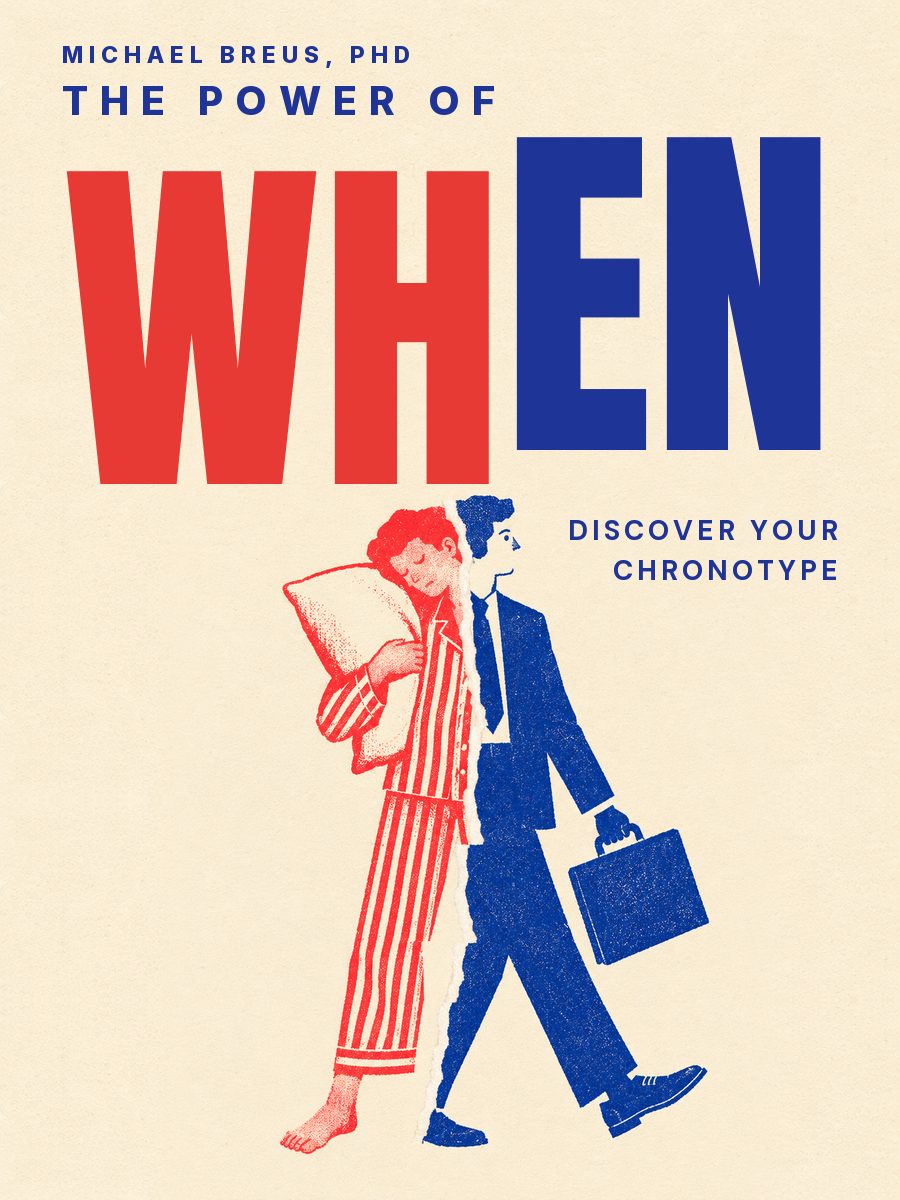
An alarm, three cups of coffee, and your head only switches on by lunch. Sleep specialist Michael Breus believes the problem is often not laziness or insomnia but timing. He describes four chronotypes and shows when to drink coffee, eat, come up with ideas and make decisions so that the day goes more easily.
Who it is for
For anyone who wakes up in a fog, comes alive only in the evening, or simply lives out of step with the common timetable.
If you are out of sync with your inner timing, you're working against your own biology. When has that ever been a good idea?
A Wolf woken at seven
Ann, a forty-year-old graphic designer, gets into bed at midnight and stares at the ceiling until two. At seven the alarm rings, and she calls what follows a “bumpy reentry into reality”. Three cups of coffee later she is still in a fog, and her best hour comes only at four in the afternoon. Doctors had been treating her for insomnia.
Michael Breus, a clinical psychologist and sleep specialist, saw something else. Ann slept well once she fell asleep; there was simply not enough sleep. In his words, she was a Wolf living in a Bear's world.
That is the book's idea. An inner clock in the brain sets the daily rhythm of body temperature, hormones, hunger and alertness, and it does not run the same way in everyone. Breus believes that when you do something matters as much as what you do and how, and that small shifts in timing can make the day easier.
Four animals instead of larks and owls
Psychologists and sleep doctors have long sorted people into larks and owls by their preferred waking time. This did not fit Breus's patients. It ignored sleep drive, a need for sleep Breus considers inborn, ignored personality and left out people with true insomnia.
So he built four chronotypes of his own, named after mammals:
• Dolphins. About 10 percent by his estimate: light sleepers, anxious perfectionists.
• Lions. 15 to 20 percent: up before dawn full of plans, out of steam by evening.
• Bears. About half of all people: they live by the sun and like a long sleep.
• Wolves. Another 15 to 20 percent: impulsive, inventive, alive in the evening.
You cannot change your type, Breus says, but you can shift your schedule by an hour or two. Age shifts the chronotype on its own: teenagers tend to be Wolves, people over sixty-five Lions and Dolphins.
This is the author's model, not a diagnosis. Studies describe most people, not everyone, Breus reminds readers, so a trait may not fit you. If unsure, he suggests asking someone close. No type is all gain: Robert, a Lion, complained that his social life was on life support, because he fell asleep just as his friends went out.
About the author
Michael Breus is an American clinical psychologist who specialises in sleep medicine. He has run a private practice for many years and regularly appears in the media as a sleep expert.
All books by this author: Michael Breus
Terms from the book
- sleep drive
- Ben
- cortisol
- adenosine
- Ann: A patient of Michael Breus, a forty-year-old graphic designer; her name was changed in the book. The author describes her as a Wolf.
- inner clock: A general name for the body's biological clocks: a group of nerve cells in the brain and smaller clocks in the organs. Together they set the daily rhythm of temperature, hormones, hunger and alertness.
- chronotype: The type of a person's daily rhythm. The four chronotypes named after animals are Breus's own model, not a medical classification.
- Dolphins: In Breus's model, light sleepers prone to worry and perfectionism; about a tenth of people by his estimate. A frame, not a diagnosis.
- Lions: In Breus's model, early risers who are most energetic in the morning and tire by evening; 15 to 20 percent of people by his estimate.
- Bears: In Breus's model, people whose day follows the sun and who need plenty of sleep; about half of all people by his estimate.
- Wolves: In Breus's model, evening people who are impulsive and creative and wake with difficulty; 15 to 20 percent of people by his estimate.
- Robert: A marketing executive from Boston whom Breus describes as a Lion; his name was changed in the book.
- Albion College: A small private college in the US state of Michigan.
- peak hours: In Breus's book, the time of day when a person is most alert and focused; each chronotype has its own.
- insight problems: Puzzles that are solved not step by step but by a sudden guess, when the answer seems to appear on its own.
- Appalachian State University: A public university in the town of Boone, North Carolina, USA.
- Murcia: A city in south-eastern Spain with a university where the study of meal timing and weight loss was carried out.
Similar books
- The Telomere Effect: A Revolutionary Approach to Living Younger, Healthier, Longer, Elizabeth Blackburn, Elissa Epel
- The Upside of Stress, Kelly McGonigal
- The Upward Spiral: Using Neuroscience to Reverse the Course of Depression, One Small Change at a Time, Alex Korb
- The Urge: Our History of Addiction, Carl Erik Fisher
- The Wisdom of Psychopaths: What Saints, Spies, and Serial Killers Can Teach Us About Success, Kevin Dutton
- Together, Vivek Murthy
- Ultra-Processed People: Why Do We All Eat Stuff That Isn't Food... and Why Can't We Stop?, Chris van Tulleken
- Unwinding Anxiety: New Science Shows How to Break the Cycles of Worry and Fear to Heal Your Mind, Judson Brewer
- The Prince, Niccolò Machiavelli
- The Psychology of Interpersonal Behaviour, Michael Argyle