
Book quiz
A Life on Our Planet: My Witness Statement and a Vision for the Future Quiz
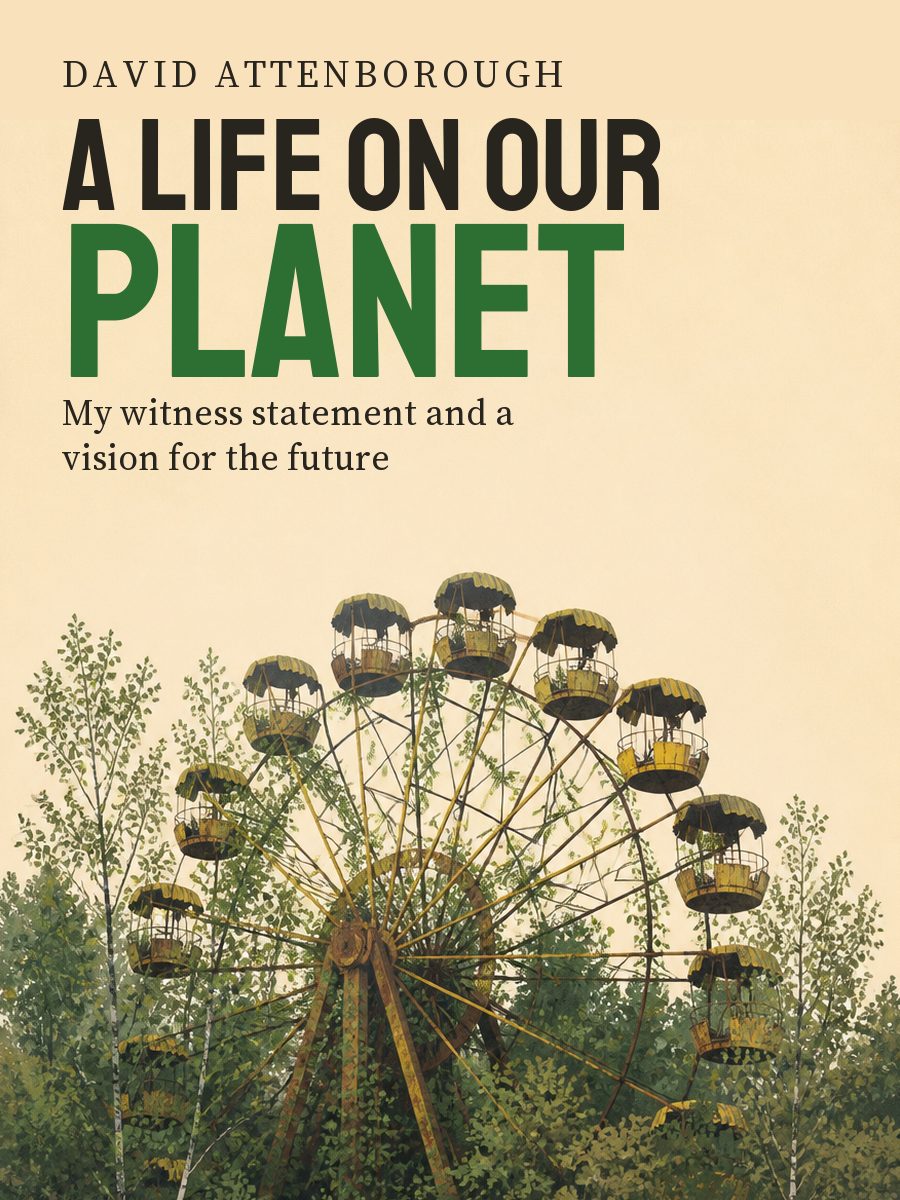 A Life on Our Planet: My Witness Statement and a Vision for the FutureDavid Attenborough
For more than sixty years David Attenborough filmed the wild world and watched it shrink. In this book he gives his witness statement: a year of his life, what he saw, and the numbers for that year. Then he explains how, in his view, we can bring the wild back.
Question 1 of 5
Standing in empty Pripyat, which disaster does Attenborough consider the real one?
Show the answer
Right answer: A slow one, all over the planet, that almost no one notices
Attenborough doesn't agree that Chernobyl is the costliest disaster. The real one is slow and everywhere, and he explains it through his own life.
Question 2 of 5
Why didn't the young Attenborough see in 1954 that the wild was shrinking?
Show the answer
Right answer: Like almost everyone, he thought nature was endless
If the forest ran out here, there would be more further on. In seventeen years the share of wilderness fell from 66 to 64 percent, and from the inside it was almost impossible to notice.
Question 3 of 5
What does Attenborough mean when he says "we are replacing the wild with the tame"?
Show the answer
Right answer: There may be plenty of life, but its variety is disappearing
About 70 percent of the mass of birds is poultry, and wild mammals make up about four percent. Variety gives way to the few species we have chosen.
Question 4 of 5
What did the example of Palau, which banned fishing in part of its waters, show?
Show the answer
Right answer: The fish recovered and began spilling over into areas where fishing is allowed
For Attenborough, this shows that nature can come back if you leave it room. The protected waters ended up helping the fishermen too.
Question 5 of 5
Why, in the author's view, does the stability of the Holocene matter so much to people?
Show the answer
Right answer: A steady climate allowed farming and the building of civilization
For the last ten thousand years, the temperature never strayed by more than a degree. Along with variety, this stability may go too.
Want all of the book's key ideas? Read or listen to its retelling in Livria.