
Book quiz
Algorithms to Live By: The Computer Science of Human Decisions Quiz
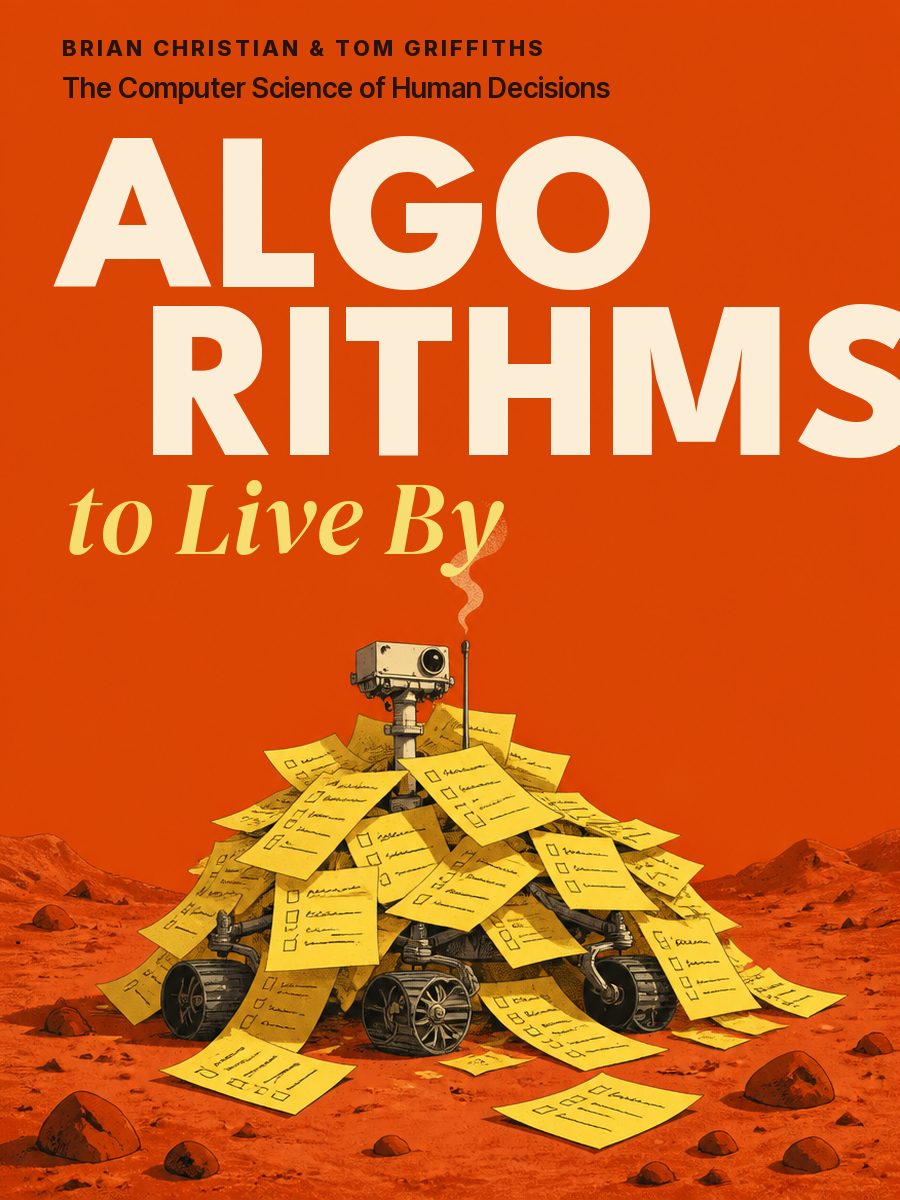 Algorithms to Live By: The Computer Science of Human DecisionsBrian Christian, Tom Griffiths
You have to take the apartment today, and you have no idea whether it beats the others. Computers face problems like this every day, and many of them have an exact answer. Brian Christian and Tom Griffiths carry solutions from computer science into everyday life: when to stop searching, what to keep close at hand…
Question 1 of 5
You have a month to find an apartment, and good ones go within hours. What does the 37 percent rule advise?
Show the answer
Right answer: Only look for the first third of the time, then take the best
The first eleven days go into getting to know the market. After that you take the first option that beats everything you've seen so far.
Question 2 of 5
It's your last night before leaving a new city. By the logic of the multi-armed bandit, where should you go?
Show the answer
Right answer: To a tried-and-true place where the food is sure to be good
New things are worth trying while there's time to make use of what you find. On your last night a discovery won't help you anymore, while a proven place won't let you down.
Question 3 of 5
A friend cancels on you for the third time. Following the example of exponential backoff, what do the authors suggest?
Show the answer
Right answer: Invite them again, but wait longer each time
After each failure, networks wait roughly twice as long. Same with a friend: the door stays open, but it opens less and less often.
Question 4 of 5
Your list of pros and cons about moving has grown to a third page. What would the authors say?
Show the answer
Right answer: Most likely you're already weighing trifles
Overfitting: a model with lots of factors memorizes noise instead of what matters. The foggier the future, the simpler the rule should be.
Question 5 of 5
Everyone was allowed unlimited vacation, and people started taking less time off. What way out do the authors see?
Show the answer
Right answer: Change the rule, for example by setting a minimum vacation
This is a Nash equilibrium: no one gains by changing their behavior alone. Travis CI introduced a mandatory minimum vacation, which means it changed the game.
Want all of the book's key ideas? Read or listen to its retelling in Livria.