
Book quiz
Do More Great Work: Stop the Busywork. Start the Work That Matters. Quiz
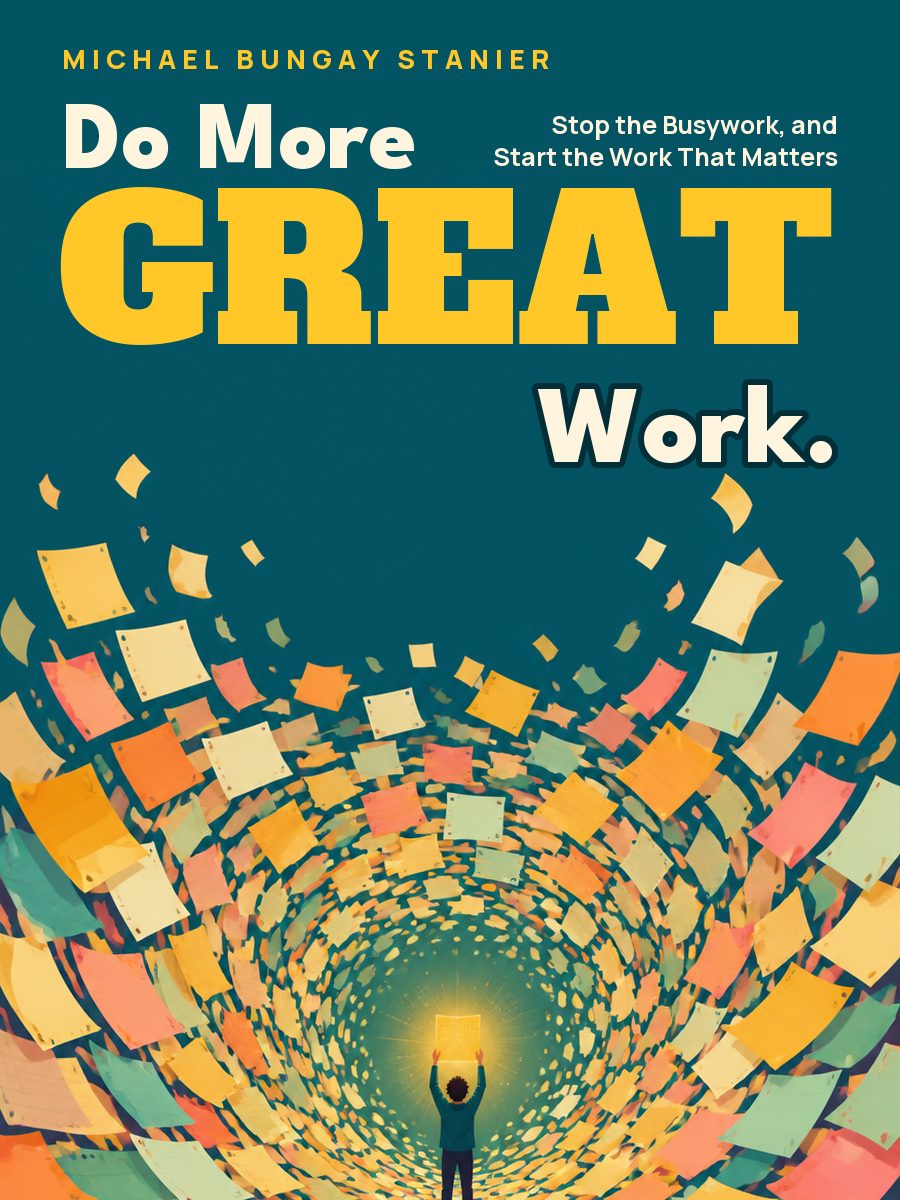 Do More Great Work: Stop the Busywork. Start the Work That Matters.Michael Bungay Stanier
You work hard, get everything done, and still tread water. Michael Bungay Stanier divides all work into Bad, Good, and Great, showing why Good Work gets in the way most of all. His simple maps help you find your Great Work, choose a project, and take the first step.
Question 1 of 5
Your week is packed with useful tasks you get praised for, but an important project is stuck. According to Stanier, what gets in the way most?
Show the answer
Right answer: Good Work: needed, but endless
Stanier sees Good Work as the most insidious: it's tempting and endless, you get praised for it, and, like a comfortable armchair, it's hard to get up from.
Question 2 of 5
You need to describe what you're like on your best days. What technique does Stanier borrow from brand work for this?
Show the answer
Right answer: Pairs of opposites: "this, not that"
As in describing a vodka brand's character, you add an opposite to every precise word about yourself. This "this, not that" says more about character than a list of virtues.
Question 3 of 5
The mess on your desk annoys you, but tackling it seems trivial. What would Stanier point out?
Show the answer
Right answer: Changes near the center often set off bigger ones
On the "What Is Broken?" map, your desk sits at the center of the circles. Stanier notes that small changes close to the center often trigger bigger ones.
Question 4 of 5
On what basis does Stanier sort all your tasks on the "What Is Required?" map?
Show the answer
Right answer: By how much they matter to you and to the organization
One axis of the map asks whether it matters to you, the other whether it matters to the organization. Great Work is easiest to grow where it matters both to you and to them.
Question 5 of 5
You've been asked to speak at a conference, and the very thought scares you. What does Stanier suggest doing?
Show the answer
Right answer: Tell yourself a story with three endings
The tenth map: the story of the project is told three times, with a happy ending, a failure and a dull one. With three versions side by side, you can see that even failure can be survived.
Want all of the book's key ideas? Read or listen to its retelling in Livria.