
Book quiz
Drive: The Surprising Truth About What Motivates Us Quiz
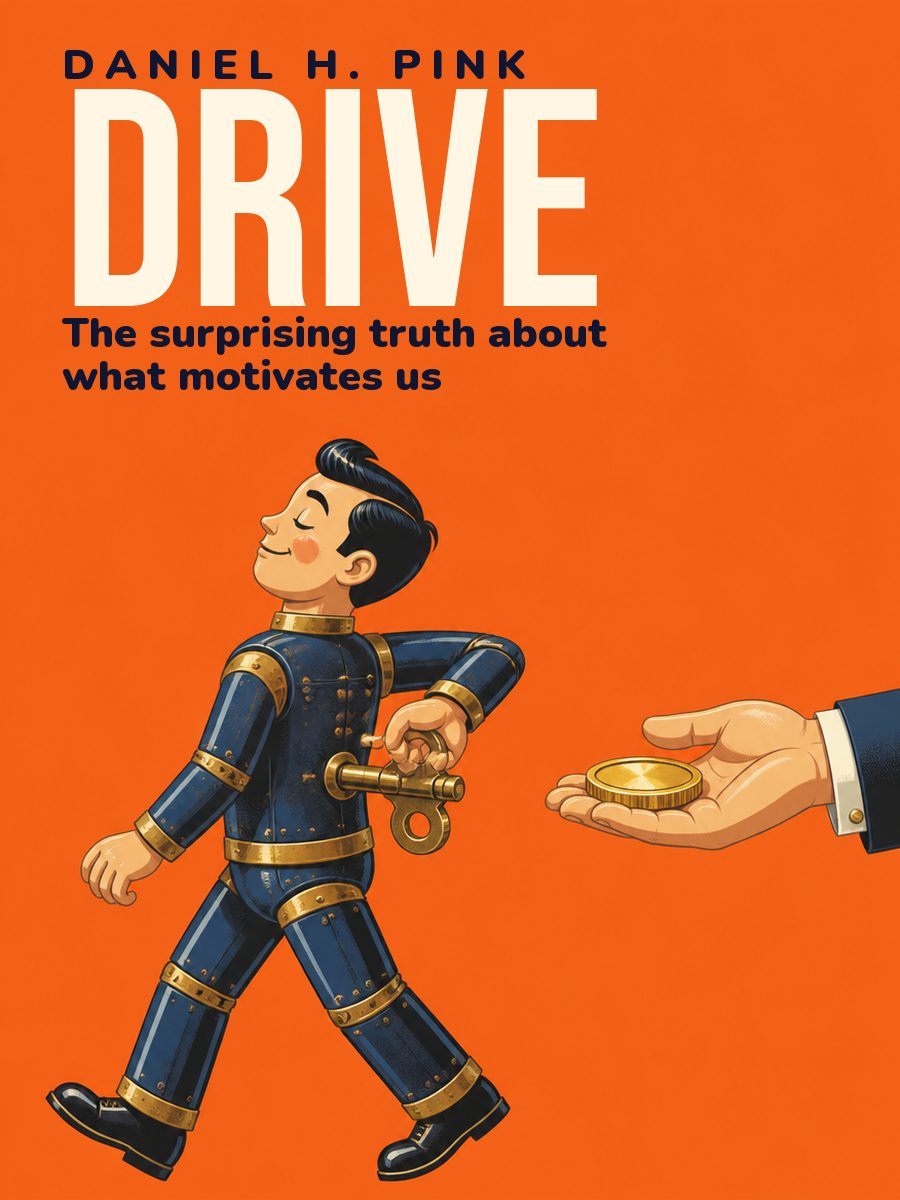 Drive: The Surprising Truth About What Motivates UsDaniel Pink
People were promised money for solving a puzzle quickly, and took longer than those promised nothing. Daniel Pink brings together experiments on when rewards help and when they hinder. He proposes a different foundation: autonomy, mastery, and purpose. We will show honestly which of his conclusions remain contested.
Question 1 of 5
A child was paid for every drawing, and then the payments stopped. According to Pink, what's most likely to happen next?
Show the answer
Right answer: He'll feel less like drawing just for fun than before
This is the Sawyer Effect: a reward can turn play into work. That's what happened in Deci's study, where students played with the puzzle less once the payments stopped.
Question 2 of 5
In Pink's account, when did the promise of money help solve the candle problem?
Show the answer
Right answer: When the box was empty and the solution was obvious
The reward got in the way when people had to see the box as a holder. When the box lay empty and the solution became obvious, the reward helped instead.
Question 3 of 5
A childcare center introduced a fine for parents who picked their children up late. What happened, according to the book?
Show the answer
Right answer: Lateness rose: the awkwardness became a service with a price
The fine seems to have turned the awkwardness felt toward the teacher into a service with a price. Lateness went up, and it didn't go down after the fine was dropped.
Question 4 of 5
You lead a team of designers. What kind of reward does Pink advise for creative work?
Show the answer
Right answer: An unexpected reward after a good result
For creative work, Pink suggests an unexpected reward after the result: it looks less like the terms of a deal than a bonus promised in advance.
Question 5 of 5
An amateur pianist is bored with pieces he learned long ago. By Pink's logic, what will bring back his interest?
Show the answer
Right answer: A piece just a little harder than his current level
Flow comes when skill and difficulty are almost even. A little below that is boredom, a little above is anxiety. These are the "Goldilocks tasks".
Want all of the book's key ideas? Read or listen to its retelling in Livria.