
Book quiz
The Egyptian Book of the Dead Quiz
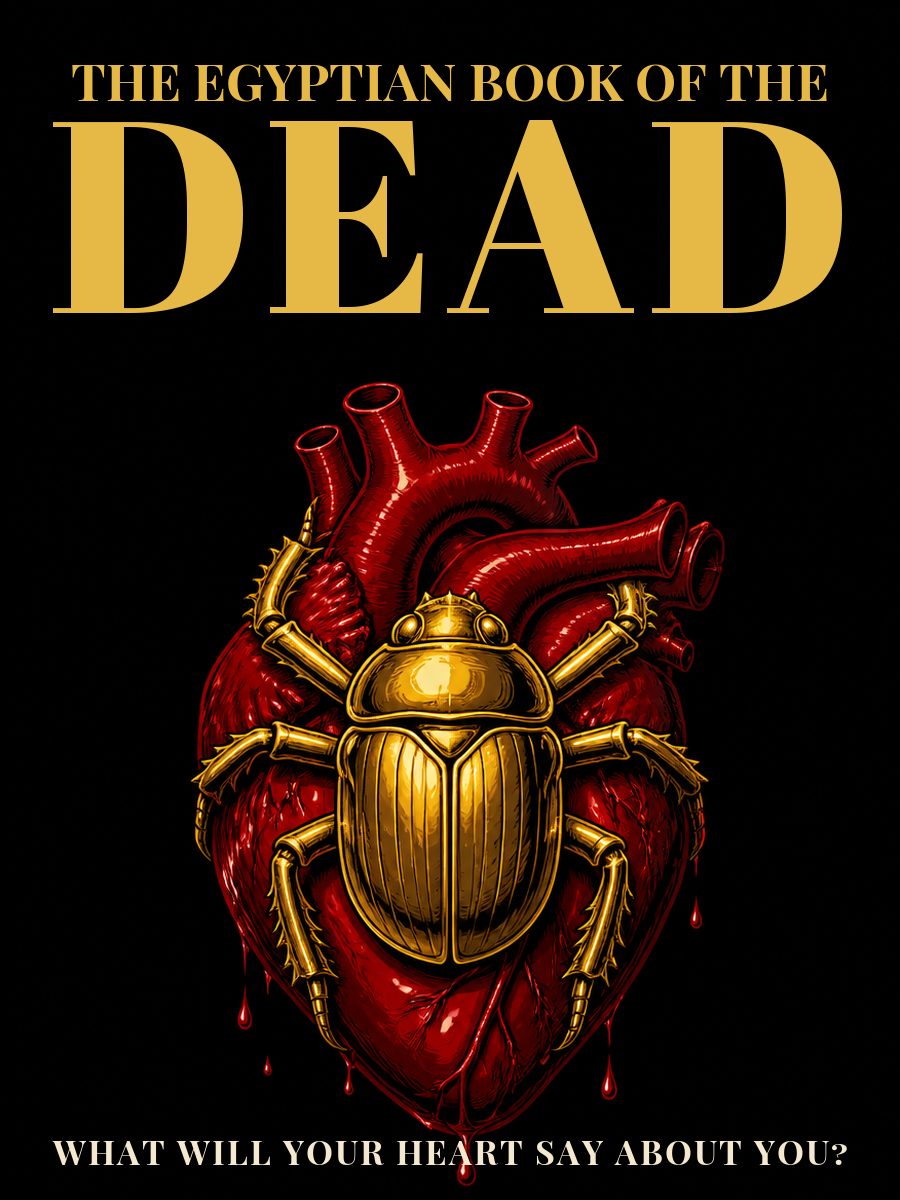 The Egyptian Book of the DeadAncient Egyptian text
A heart goes on one pan of the scales and a feather on the other, while a monster with a crocodile's jaws waits nearby. This is how the Egyptians pictured the great final test, and for it they prepared a scroll of spells. This book explains what that scroll really was, why the dead needed to know the names of doors…
Question 1 of 5
What was the "Book of the Dead" really for the Egyptians?
Show the answer
Right answer: A set of spells put together for one person
About two hundred spells are known, and no scroll contains them all. Workshops prepared scrolls in advance and left a blank space for the owner's name.
Question 2 of 5
Why are the scrolls full of strange names of doors, guards and judges?
Show the answer
Right answer: Knowing a name meant having power over its bearer
For an Egyptian, names were passwords: the door of the Hall of Judgement let the dead man through only when he called the bolt, the doorposts and the threshold by name.
Question 3 of 5
Which witness did the dead man fear most at the trial before Osiris?
Show the answer
Right answer: His own heart
For the Egyptians, the heart was the seat of memory and conscience. Ani begs it not to stand up as a witness against him before the keeper of the scales.
Question 4 of 5
A shopkeeper knows her scales cheat in her favor, and no one will notice. How does this relate to the Negative Confession?
Show the answer
Right answer: Cheating on the scales is named outright in the list of sins
The list of forty-two "I have not" is almost entirely about other people, and among them is: I have not added to the weights of the scales.
Question 5 of 5
How did the Egyptians imagine the Field of Reeds, where those who passed the trial went?
Show the answer
Right answer: Egypt, only better: with fields and harvests
The dead eat, drink, plow and reap there, just as on earth. And so as not to do the work themselves, they had shabti, figurines of servants, put in the tomb.
Want all of the book's key ideas? Read or listen to its retelling in Livria.