
Book quiz
Emotional Agility: Get Unstuck, Embrace Change, and Thrive in Work and Life Quiz
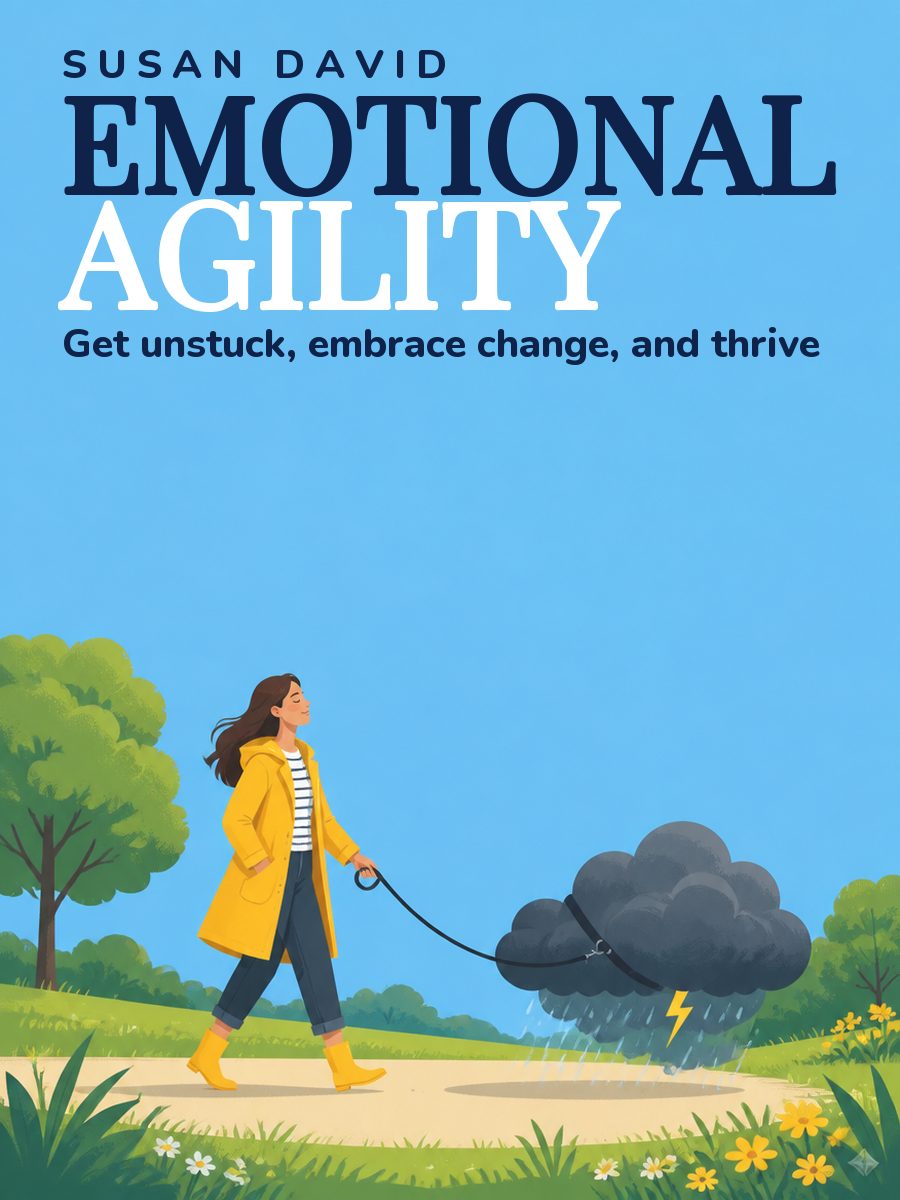 Emotional Agility: Get Unstuck, Embrace Change, and Thrive in Work and LifeSusan David
After her father dies, a teenage girl tells everyone she is fine. Years later she becomes a psychologist and explains why “holding it together” and “thinking positive” sometimes only get in the way. This book is about noticing the hooks your own thoughts catch you on, and choosing what to do by your values rather…
Question 1 of 5
A colleague didn't answer your email, and an hour later at a meeting you speak to him coldly: "He doesn't respect me." What is this, according to David?
Show the answer
Right answer: A thought hooked you, became a fact and is steering your actions
David calls this a hook: a thought or feeling catches you and starts steering your behavior. The thought is taken for the truth, and you act on it.
Question 2 of 5
The goal: "I want never to feel nervous before a talk." How does David see it?
Show the answer
Right answer: A dead person's goal: only the dead live without difficult feelings
Only people who are no longer alive can never feel fear or shame. Discomfort, according to David, is the price of admission to a meaningful life.
Question 3 of 5
In the evening you feel like snapping at everyone. Where does David's model advise starting?
Show the answer
Right answer: Find the precise word, for example "I'm hurt that I wasn't noticed"
A precise word for a feeling hints at what's going on. "I'm drained" says little, while "I'm hurt" already shows who you need to talk to.
Question 4 of 5
You decide to write about a painful event for twenty minutes a day. According to David, what kind of writing helps more?
Show the answer
Right answer: Writing where you gradually come to understand what happened
Drawing on Pennebaker, David writes that writing with gradual understanding helped more. Pouring out the same thing over and over is like chewing on it.
Question 5 of 5
Third year in the job, the same thing every day, and it keeps getting duller. What tweak does David suggest?
Show the answer
Right answer: Take on one task you don't feel sure of yet
By the teeter-totter principle, when skill outweighs challenge, boredom sets in. Growth happens at the edge, and changes are best made as tiny tweaks.
Want all of the book's key ideas? Read or listen to its retelling in Livria.