
Book quiz
God Is Not One Quiz
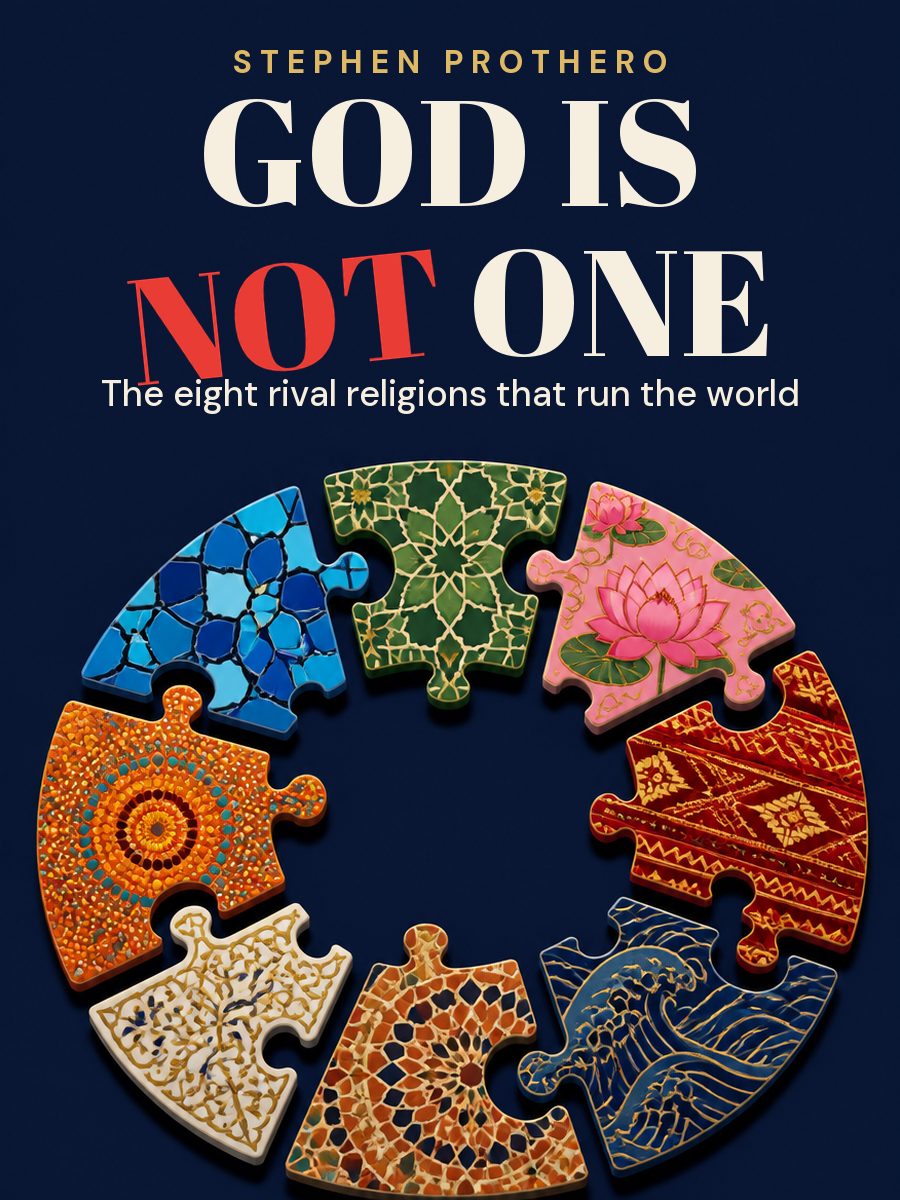 God Is Not OneStephen Prothero
People say that all religions are different paths up the same mountain. Religion scholar Stephen Prothero believes there are several mountains. He asks the eight religions he considers the most influential, and atheism, the same four questions and shows that they diagnose the basic human problem itself differently. A…
Question 1 of 5
A friend says: "All religions lead up the same mountain." How does Prothero see this?
Show the answer
Right answer: As a beautiful mistake: religions climb different mountains
Prothero grants that religions largely agree on ethics, but they differ in doctrine, ritual and law. That's why he calls the one-mountain idea a beautiful mistake.
Question 2 of 5
How does Prothero compare religions?
Show the answer
Right answer: He asks each about its problem, solution, technique and exemplar
The key to the whole book is four questions: what human problem a religion sees, what solution it offers, what practices lead there, and who shows the way.
Question 3 of 5
In Prothero's model, what does Islam see as the central human problem?
Show the answer
Right answer: Pride, living as if there were no God
In the author's model, Islam sees the problem as pride: trying to live self-sufficiently, without God. The solution is submission. Sin and salvation belong to Christianity, suffering to Buddhism.
Question 4 of 5
An acquaintance says: "All religions are equally false." How does Prothero see this?
Show the answer
Right answer: As erasing the differences again, only with the sign flipped
In Prothero's view, the New Atheists repeat the mistake of those who say all religions are about the same thing: in both cases the differences are erased, only the conclusion is reversed.
Question 5 of 5
How does Prothero read the parable of the blind men and the elephant?
Show the answer
Right answer: As a reminder of the limits of human knowledge
The parable is usually told as comfort: everyone is right. Prothero reads it the other way: it speaks of the limits of our knowledge and of how the highest humbles us.
Want all of the book's key ideas? Read or listen to its retelling in Livria.