
Book quiz
Good Strategy Bad Strategy: The Difference and Why It Matters Quiz
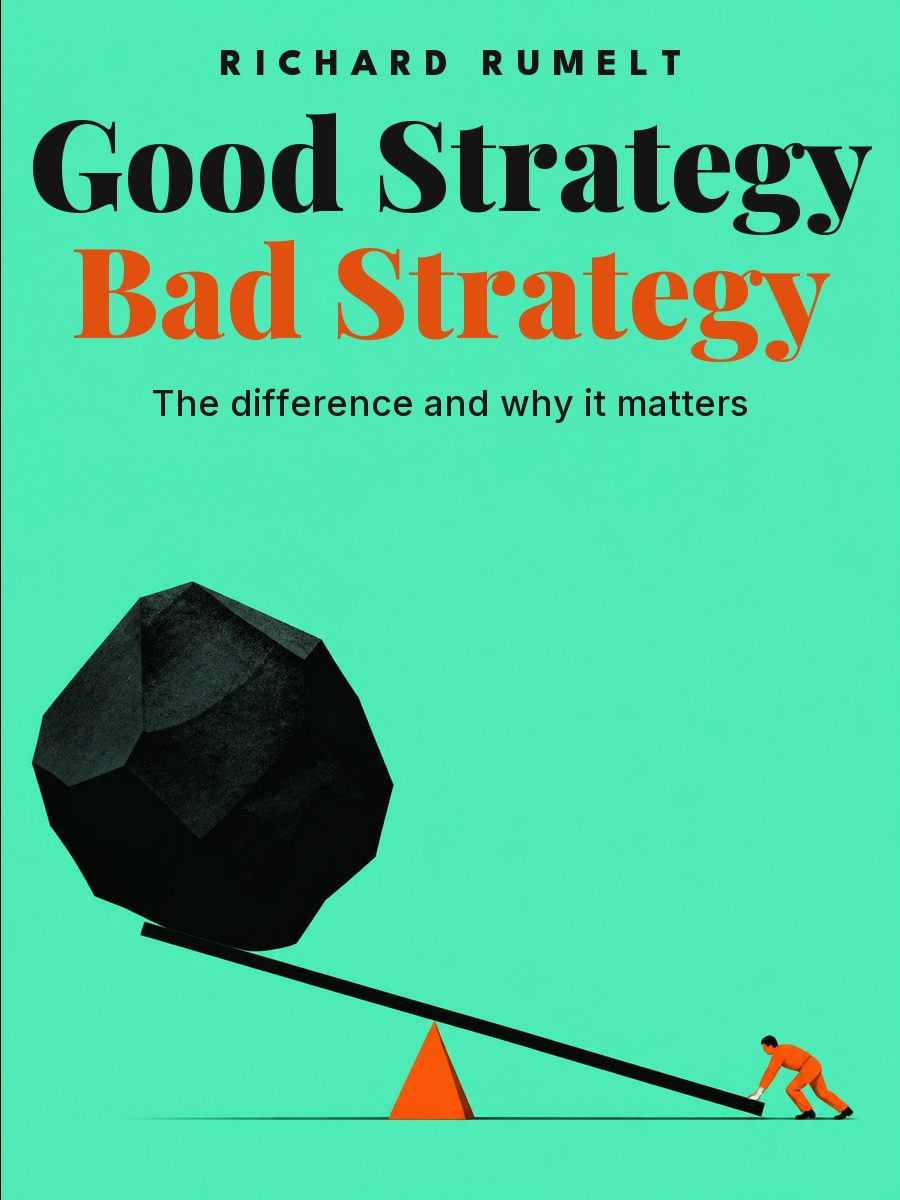 Good Strategy Bad Strategy: The Difference and Why It MattersRichard Rumelt
Why do so many "strategies" change nothing? Richard Rumelt shows that most of them are slogans, numbers and wish lists, while a real strategy names the main difficulty and gathers forces against it. You'll see the difference in examples from Apple to the Moon programme, and you'll be able to test your own plan.
Question 1 of 5
A manager announces: "Our strategy is 20% growth a year." What would Rumelt say?
Show the answer
Right answer: It's a goal, not a strategy: there's no answer to "how"
A goal is a wish. Strategy begins where the answer to "how?" deals with the real obstacles: what stands in the way of growth and where the company has leverage.
Question 2 of 5
Every department's wishes went into the plan so nobody would be offended. What's wrong here, according to Rumelt?
Show the answer
Right answer: The plan makes no choices, so it has no strategy
Rumelt calls this a dog's dinner. Good strategy demands choosing and saying no, and when a plan holds everything, the real difficulty is never named.
Question 3 of 5
What three parts make up the kernel of a strategy, according to Rumelt?
Show the answer
Right answer: A diagnosis, a guiding policy and coherent actions
The diagnosis explains what's going on, the guiding policy chooses the path, and the actions support each other. Rumelt criticizes the vision, mission and values template.
Question 4 of 5
A team doesn't know how to approach a huge task. What does Rumelt advise, using the example of Surveyor?
Show the answer
Right answer: Name a proximate objective that can already be solved
Phyllis Buwalda described the lunar surface in a way engineers could work with. A proximate objective turns fog into work and gives people something to stand on.
Question 5 of 5
In a chain-link system, one link is weak. Where does the book say to put your effort?
Show the answer
Right answer: Into the weak link, since it decides the result
In a chain-link system the weakest link decides the result, like the Challenger's O-ring. Improving the strong links is pointless until the weak one is fixed.
Want all of the book's key ideas? Read or listen to its retelling in Livria.