
Book quiz
How to Win Friends and Influence People Quiz
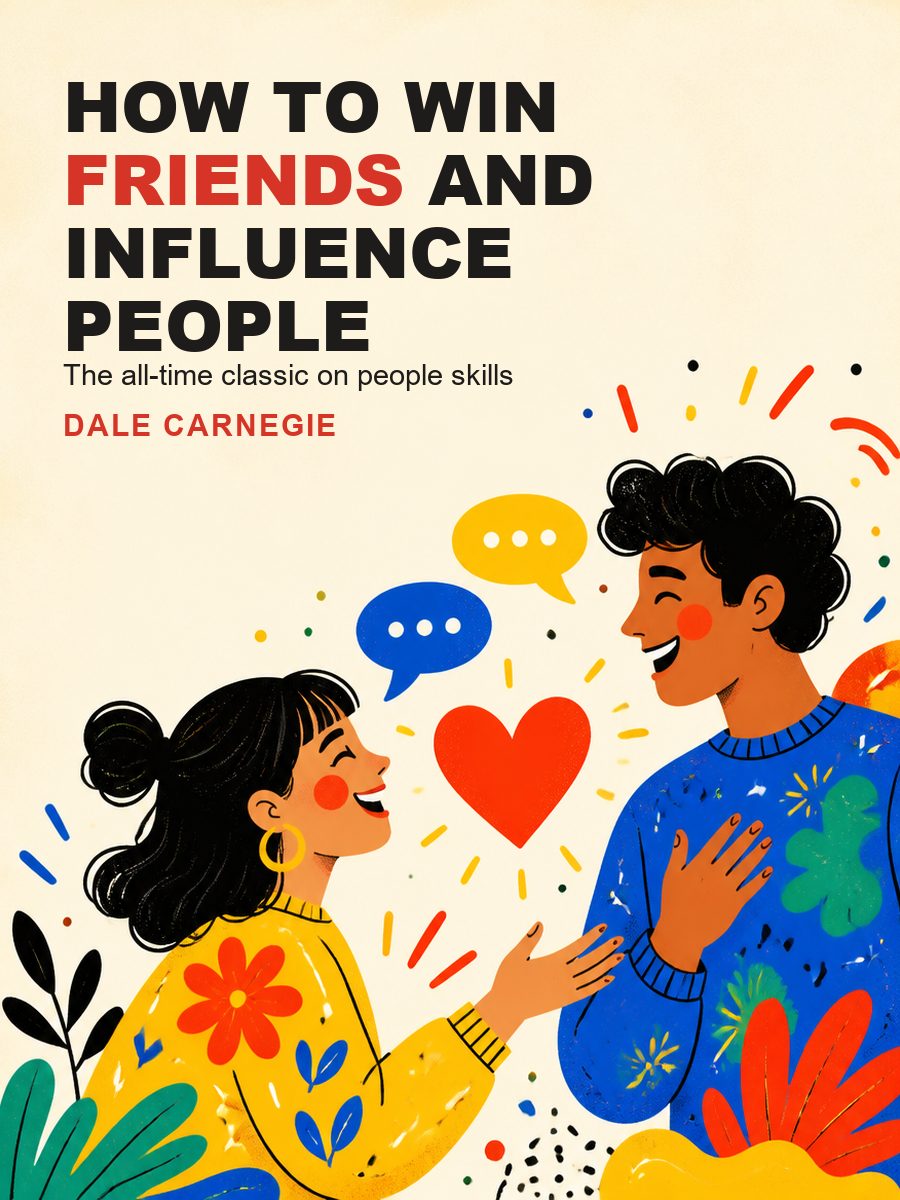 How to Win Friends and Influence PeopleDale Carnegie
Why does the smart person who wins every argument still end up alone, while someone who simply knows how to listen draws people in without a single brilliant argument? Carnegie shows that the secret isn't clever tricks but genuine attention to the other person. Step by step, he explains how that attention grows into…
Question 1 of 5
A new hire botched a report. How, according to Carnegie, do you get him to work better?
Show the answer
Right answer: Understand why he did it and talk about the work without belittling him
Criticism hurts a person's pride, so they get defensive and start hiding mistakes. Change starts with a talk about the work, not with blame.
Question 2 of 5
You need someone to do something. Where does Carnegie say to start the conversation?
Show the answer
Right answer: With how it helps them get what they want
People care about what they want. You bait the hook with worms, not strawberries: find a reason they might need it themselves.
Question 3 of 5
A coworker is arguing hotly about which messaging app is best. What does the book advise?
Show the answer
Right answer: Listen, look for where he's right and find common ground
Even if you win on the facts, you lose: the person is hurt and keeps his opinion. Wounded pride doesn't surrender, so it's better to avoid a head-on clash.
Question 4 of 5
You missed a deadline, and your manager is ready to tell you off. What does the book say to do?
Show the answer
Right answer: Admit the mistake first, plainly, and say how you're fixing it
Admitting it first takes the ground from under the other person: there's nothing left to prove. You can't argue with someone who has already scolded himself.
Question 5 of 5
You want to talk your parent into letting you go on a camping trip. What move does Carnegie suggest?
Show the answer
Right answer: Start with what you both agree on and lead toward a "yes"
A string of yeses sets a person up to keep agreeing, while a first "no" puts their pride on guard. After saying "yes" a few times, it's hard to dig in.
Want all of the book's key ideas? Read or listen to its retelling in Livria.