
Book quiz
The Intelligent Investor Quiz
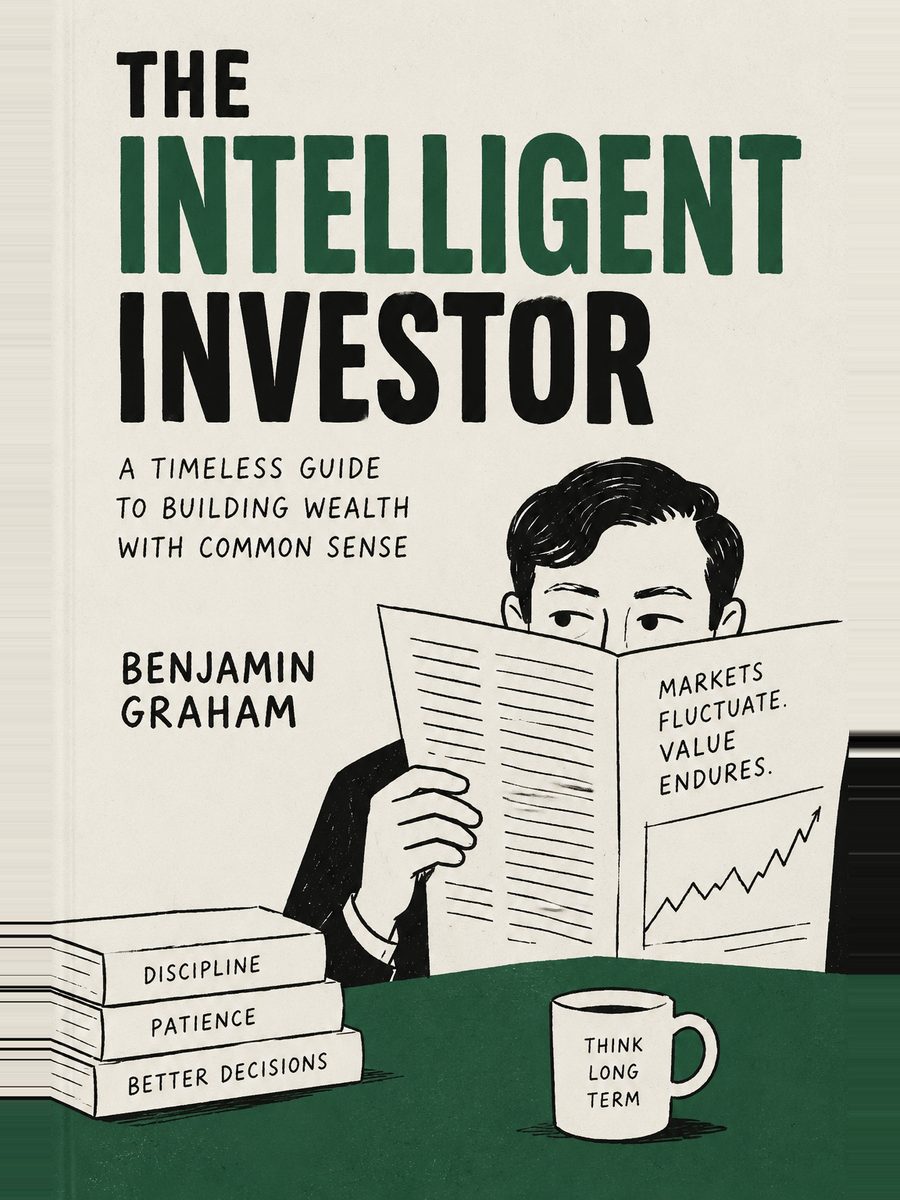 The Intelligent InvestorBenjamin Graham
Why do you panic and sell at the very bottom, then buy in delight at the very top, again and again? Graham shows that your money's worst enemy isn't the market but your own fear and greed. The book teaches you to tell price from true value and to buy with a margin of safety that forgives mistakes, instead of chasing…
Question 1 of 5
The market is in a panic, and the price of a share in a good company has halved. How does Graham suggest looking at this?
Show the answer
Right answer: Compare the price with the fair value: it may be an opportunity
Price jumps with moods, while value depends on what the thing earns. When the crowd drives the price below value, it's an opportunity, not a reason to run.
Question 2 of 5
A share's fair value is about a hundred. By the margin of safety rule, what should you pay for it?
Show the answer
Right answer: Noticeably less, around sixty or seventy
The margin of safety accepts that everyone makes mistakes. Buying well below fair value turns an error in your math from a disaster into a minor setback.
Question 3 of 5
Your friends are investing in a project whose point nobody can explain in plain words. What would Graham say?
Show the answer
Right answer: Walk away: you can't value what you don't understand
If you can't explain how something makes money, you're not buying, you're guessing. There's no shame in passing on what you haven't figured out.
Question 4 of 5
You want to "catch the bottom" and invest at the perfect moment. What does the book consider more reliable?
Show the answer
Right answer: Invest small amounts regularly by a set rule
Almost no one can time the market consistently. Regular investing buys less when prices are high and more when they're low, and it takes the emotions out of the decision.
Question 5 of 5
According to Graham, what question should you ask yourself before any investment?
Show the answer
Right answer: How much will I lose in the worst case, and can I survive it
The order is strict: first don't lose, then grow. If you lose half, you have to double just to get back, so protecting capital matters more than returns.
Want all of the book's key ideas? Read or listen to its retelling in Livria.