
Book quiz
Man, the Manipulator: The Inner Journey from Manipulation to Actualization Quiz
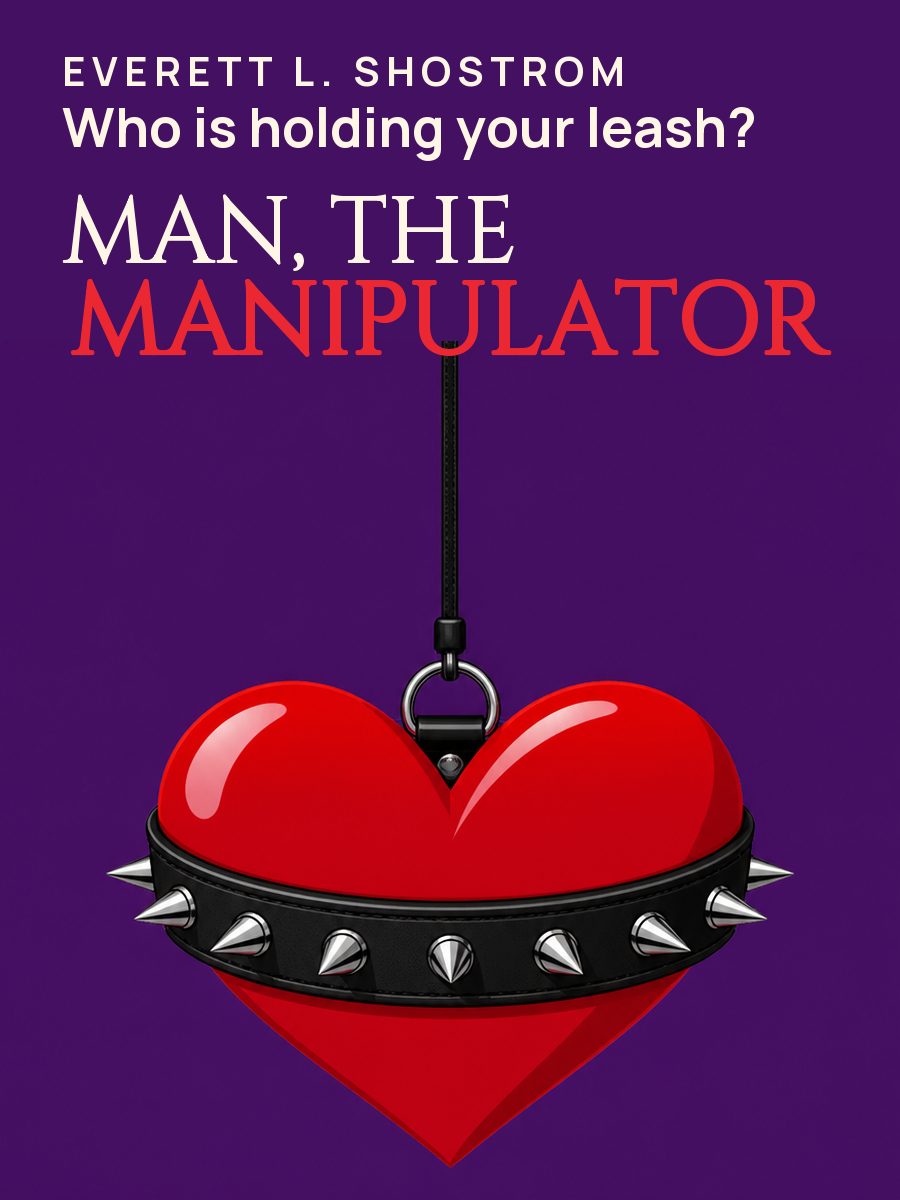 Man, the Manipulator: The Inner Journey from Manipulation to ActualizationEverett L. Shostrom
Who controls a family more: the person giving orders or the one quietly sighing? Psychotherapist Everett Shostrom describes eight manipulator types, from the Dictator to the Nice Guy, showing that weakness and kindness can be levers just as strength can. One axis runs through the whole book: from treating yourself…
Question 1 of 5
According to Shostrom, who does a manipulator treat as a thing first of all?
Show the answer
Right answer: Themselves
A manipulator first turns themselves into a thing: hides real feelings, plays a role, controls their face. Only then do they treat others the same way.
Question 2 of 5
A grown son "can't cope" with housework, and his mother does everything for him. What does Shostrom see here?
Show the answer
Right answer: The son controls through helplessness, the mother through caretaking
Each type exaggerates one side of a person. Weakness and kindness become levers just as strength does: the Weakling can run a household as much as the Dictator.
Question 3 of 5
What does Shostrom suggest doing with the "Dictator" in yourself?
Show the answer
Right answer: Turn the same strength into its mature form, the Leader
Actualization grows from the seeds of manipulation. The Dictator becomes the Leader, who leads rather than orders: the strength stays, but it serves people.
Question 4 of 5
How is an actualizer different from a manipulator, according to Shostrom?
Show the answer
Right answer: They can move between the poles of strength and weakness
A manipulator gets stuck at one pole and inflates it. An actualizer can be strong and admit weakness, be angry and keep loving.
Question 5 of 5
The Nice Guy is always caring and accommodating. Why does Shostrom still count him as a manipulator?
Show the answer
Right answer: He inflates care and "kills with kindness"
Each type exaggerates one side of a person and hides the opposite. The Nice Guy exaggerates care and, in the book's phrase, kills with kindness.
Want all of the book's key ideas? Read or listen to its retelling in Livria.