
Book quiz
Multipliers: How the Best Leaders Make Everyone Smarter Quiz
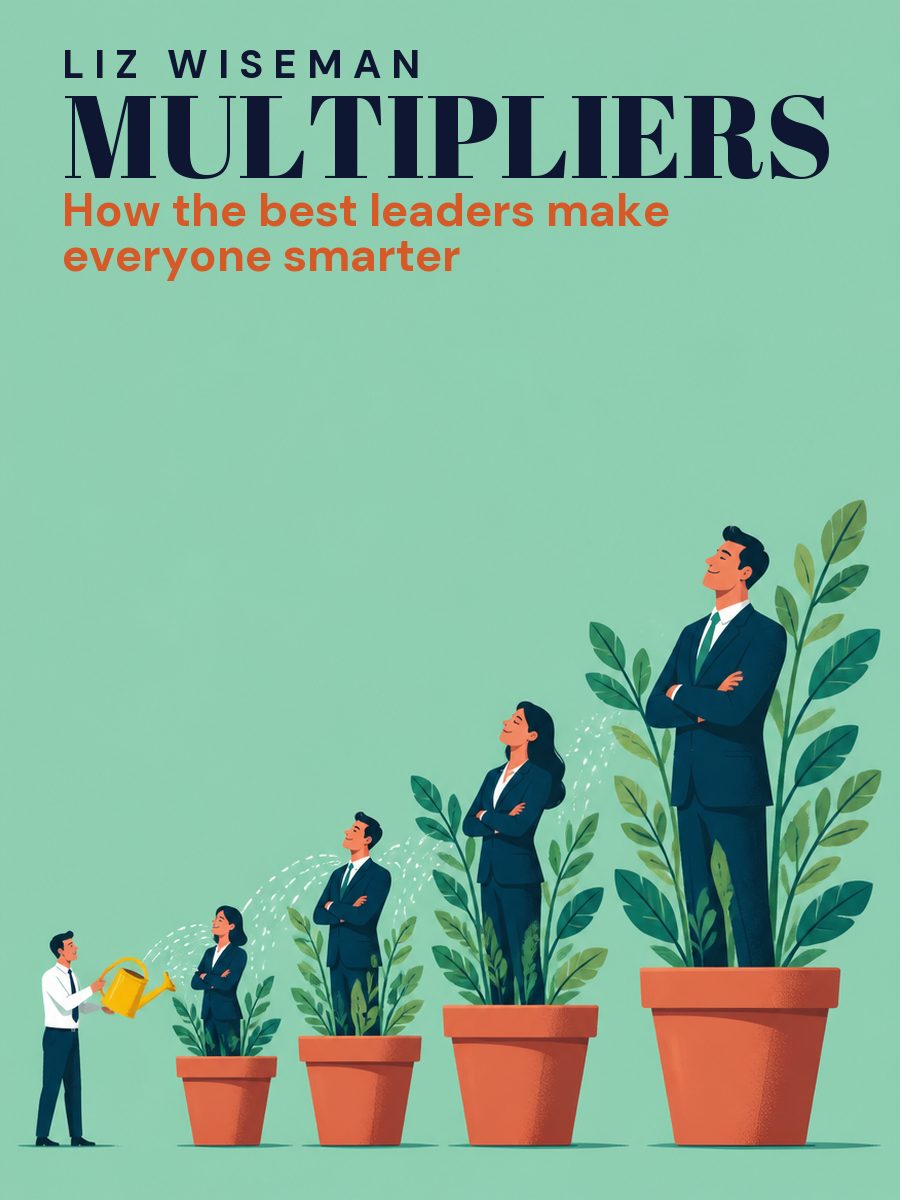 Multipliers: How the Best Leaders Make Everyone SmarterLiz Wiseman, Greg McKeown
Around some leaders, people become bolder and think more clearly; around others, they fall silent. Liz Wiseman interviewed around a hundred and fifty leaders and their employees and described what distinguishes the first group. An unexpected idea: you can diminish people with the very best intentions.
Question 1 of 5
You've been given a growth target with no new people on the team. How would a Multiplier from the book see this?
Show the answer
Right answer: People aren't using all their abilities, and growth can come from what you have
Wiseman's multiplication logic: most people don't use all their abilities, and growth comes from unlocked talent, not extra hands.
Question 2 of 5
At a meeting, a manager mocked an employee's question. According to the book, what happens next?
Show the answer
Right answer: People almost stop asking questions and go quiet
After Campbell's "stupidest question," the room went silent, and for weeks afterward hardly anyone asked him questions.
Question 3 of 5
A coworker always finishes your work for you "to help." What would Wiseman call him?
Show the answer
Right answer: An Accidental Diminisher, a rescuer who robs people of experience
In the author's assessment, the rescuer is the most common Accidental Diminisher: he rushes in to help at the first sign of trouble and robs people of the experience they need.
Question 4 of 5
In the book, what does "giving the pen back" mean after a leader has stepped in?
Show the answer
Right answer: Teaching, then handing the task back so the person stays in charge
An Investor doesn't pull away: he may step in and teach, but then he gives the pen back so the person knows they're still in charge.
Question 5 of 5
How does a Debate Maker prepare a debate about an important decision?
Show the answer
Right answer: Says in advance what's being decided, why, who takes part and who decides
The Debate Maker does the work before the debate: a frame of four questions about what's being decided, why it matters, who takes part and how the decision will be made.
Want all of the book's key ideas? Read or listen to its retelling in Livria.