
Book quiz
On the Origin of Species Quiz
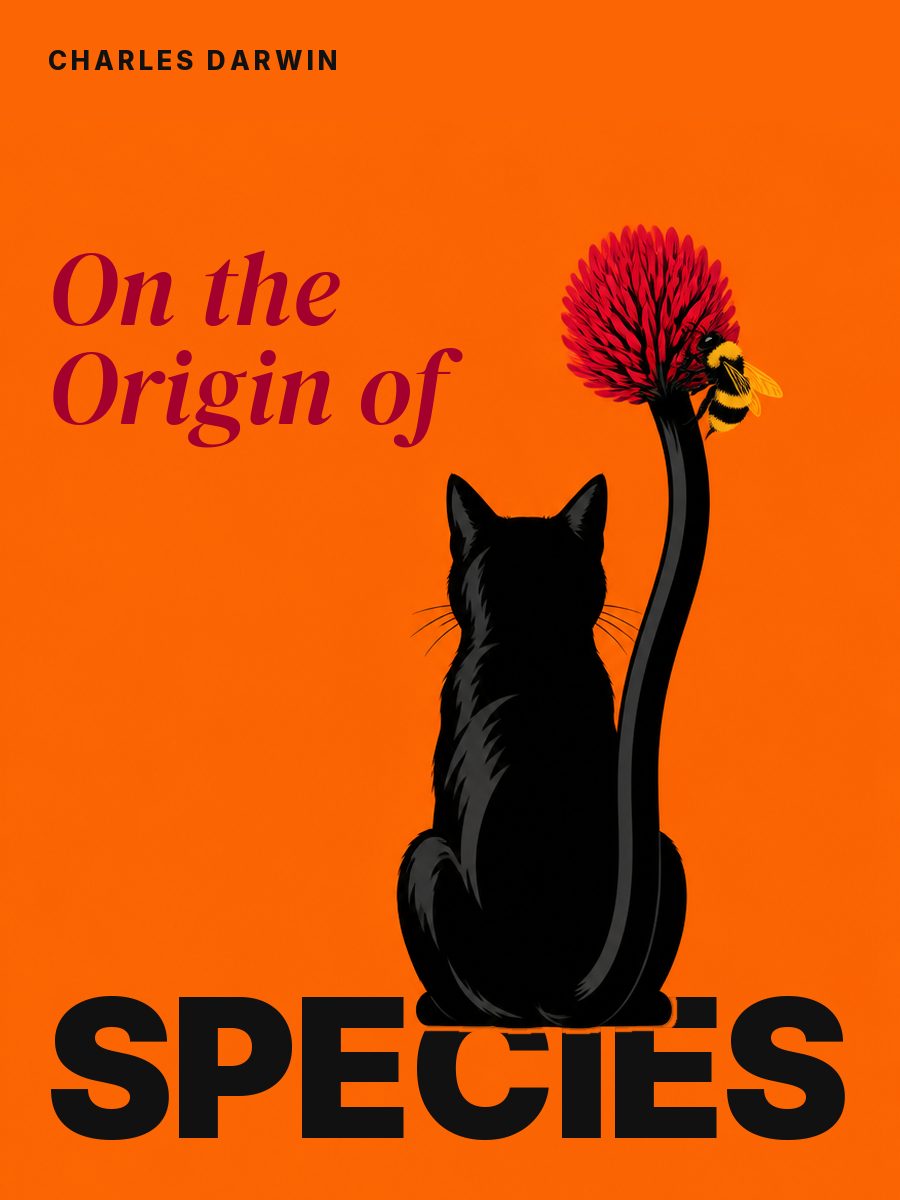 On the Origin of SpeciesCharles Darwin
Why is the woodpecker's beak made just right for bark, and why do faraway islands have no frogs but plenty of bats? Charles Darwin spent twenty years gathering facts: he bred pigeons, counted weed seedlings, kept seeds in seawater. His answer: species were not created once and for all, they descend from one another…
Question 1 of 5
A neighbor is sure that each breed of his chickens had its own wild ancestor. What would Darwin's experiment with pigeons show him?
Show the answer
Right answer: They all came from one ancestor
The grandchild of a white fantail and a black barb came out colored exactly like the wild rock pigeon: the traits of the common ancestor showed through again.
Question 2 of 5
In spring, hundreds of seedlings came up in a garden bed, and by summer only a few were left. How would Darwin explain this?
Show the answer
Right answer: That's the struggle for existence
On Darwin's cleared patch, 295 of 357 seedlings died, mostly from slugs and insects. More are born than can survive.
Question 3 of 5
A friend says the eye is too complex to have formed gradually. What would Darwin answer?
Show the answer
Right answer: What matters is the usefulness of each step
Darwin showed a series running from a nerve coated with pigment to a complex eye. If each step is useful to its owner, the difficulty is great only for the imagination.
Question 4 of 5
The museum has no fossil linking two related species. According to Darwin, does this mean it never existed?
Show the answer
Right answer: No, the fossil record is fragmentary
Layers with fossils build up only where the seabed slowly sinks. Of the Earth's record, only separate chapters survive, with a few lines on each page.
Question 5 of 5
On a remote island there are bats, but no frogs or other mammals. Why, according to Darwin?
Show the answer
Right answer: Animals with wings can fly across the sea
Seawater kills frog spawn, and land mammals can't cross hundreds of miles of ocean. Bats fly over the sea and live on almost every island.
Want all of the book's key ideas? Read or listen to its retelling in Livria.