
Book quiz
Out of Our Minds: What We Think and How We Came to Think It Quiz
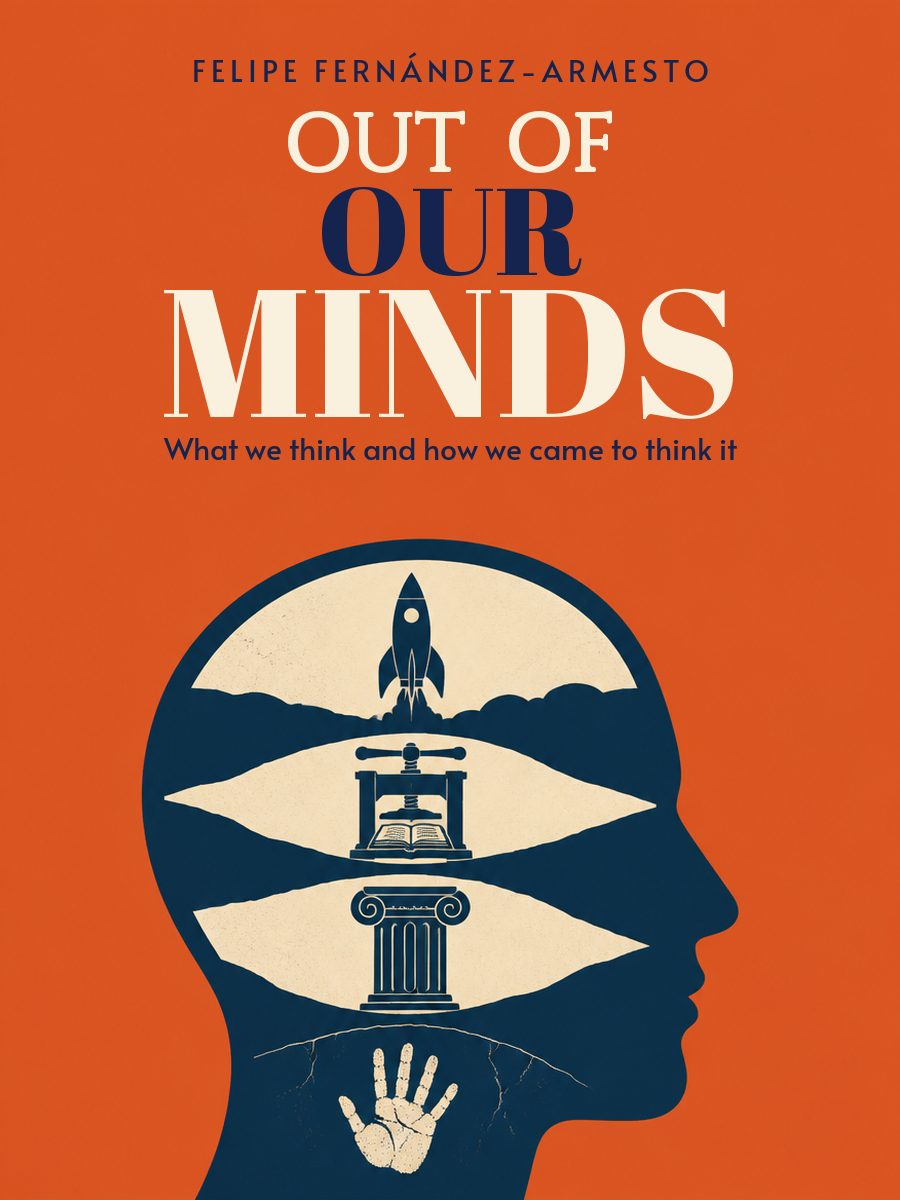 Out of Our Minds: What We Think and How We Came to Think ItFelipe Fernández-Armesto
Every thought that seems obvious to you was once a bold invention. Historian Felipe Fernández-Armesto guides you through humanity's history of ideas, from the first burials to quantum physics and postmodernism. He shows how ideas are born and why progress in thinking is by no means guaranteed.
Question 1 of 5
You remember your grandmother's house as a little bigger and brighter than it was. How would the author see this?
Show the answer
Right answer: As a source of imagination from which ideas grow
In the author's view, memory constantly distorts the past a little and assembles new pictures from fragments. Together with anticipation, this is what produces ideas.
Question 2 of 5
At work people say: "That's how it's done here, only the boss decides." What from the book is worth remembering?
Show the answer
Right answer: Behind it is someone's old idea, not a law of nature
The ideas of power and order were once invented by people who settled on the land. "It's always been this way" usually hides someone's old idea that can be discussed.
Question 3 of 5
How does the author see the relationship between faith and reason in the age of the great religions?
Show the answer
Right answer: Faith and reason more often talked than fought
Religious thinkers tried to prove their faith with logic and built complex systems. Science later inherited many of their questions.
Question 4 of 5
In an argument about politics, you feel you're absolutely right. Which lesson of the nineteenth century fits here?
Show the answer
Right answer: Ask yourself what happens if you're wrong
Confident ideas of progress, social Darwinism and nationalism led to wars. An idea believed in too firmly can be more dangerous than a mistake.
Question 5 of 5
According to the book, where are great ideas most often born?
Show the answer
Right answer: Where cultures, people and eras meet
The sages of antiquity, the Renaissance and the Enlightenment drew strength from contact with other worlds and with the past. Such encounters made people doubt their own views.
Want all of the book's key ideas? Read or listen to its retelling in Livria.