
Book quiz
The Principles of Scientific Management Quiz
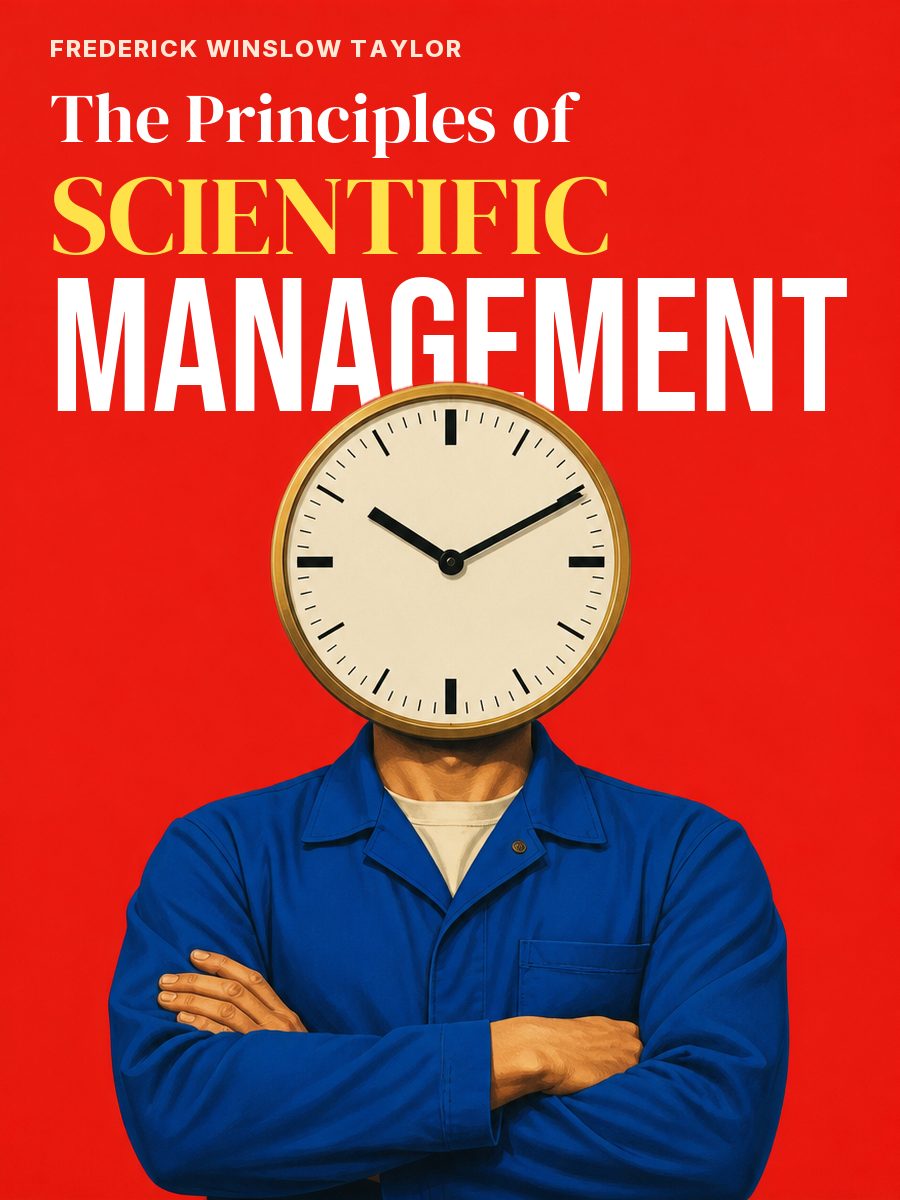 The Principles of Scientific ManagementFrederick Winslow Taylor
Why do people deliberately work slower than they can, and why can that be sensible? The engineer Frederick Taylor timed work with a stopwatch and showed how a loader, a labourer with a shovel and a bricklayer could each do several times as much without wearing themselves out. A classic from 1911 about the efficiency…
Question 1 of 5
A worker walks briskly to the factory but slows down at his machine. How does Taylor explain systematic soldiering?
Show the answer
Right answer: Calculation: speed doesn't pay
Produce more, and the rate per piece gets cut: more work for the same money. As long as the system punishes speed, slowing down makes sense.
Question 2 of 5
Your job means carrying heavy loads all day, and you want to get more done. What did Taylor's measurements show?
Show the answer
Right answer: Rest in good time: rest is part of the work
With a heavy load, a person can be under it for only part of the day. Schmidt, taught to sit down in good time, worked steadily until evening instead of wearing out by noon.
Question 3 of 5
In Taylor's system, who works out the best way to do a job?
Show the answer
Right answer: Management, which studies the work and writes the instructions
Taylor replaces rule of thumb with science: management studies each movement, chooses the best method and takes over the planning. Responsibility is split between manager and worker.
Question 4 of 5
The best ore unloaders were lured to another factory with a higher rate. Why did they earn less there?
Show the answer
Right answer: They worked there in one shared gang
In a shared gang on one wagon, the laziest man set the pace. Back home each had his own wagon, and even at a lower rate they earned more.
Question 5 of 5
Inspectors had their workday cut step by step from ten and a half hours. What happened to their output?
Show the answer
Right answer: It rose with every cut
The long day filled up with idleness. With a shorter day and regular short breaks, people worked the whole time they were at work.
Want all of the book's key ideas? Read or listen to its retelling in Livria.