
Book quiz
Quit: The Power of Knowing When to Walk Away Quiz
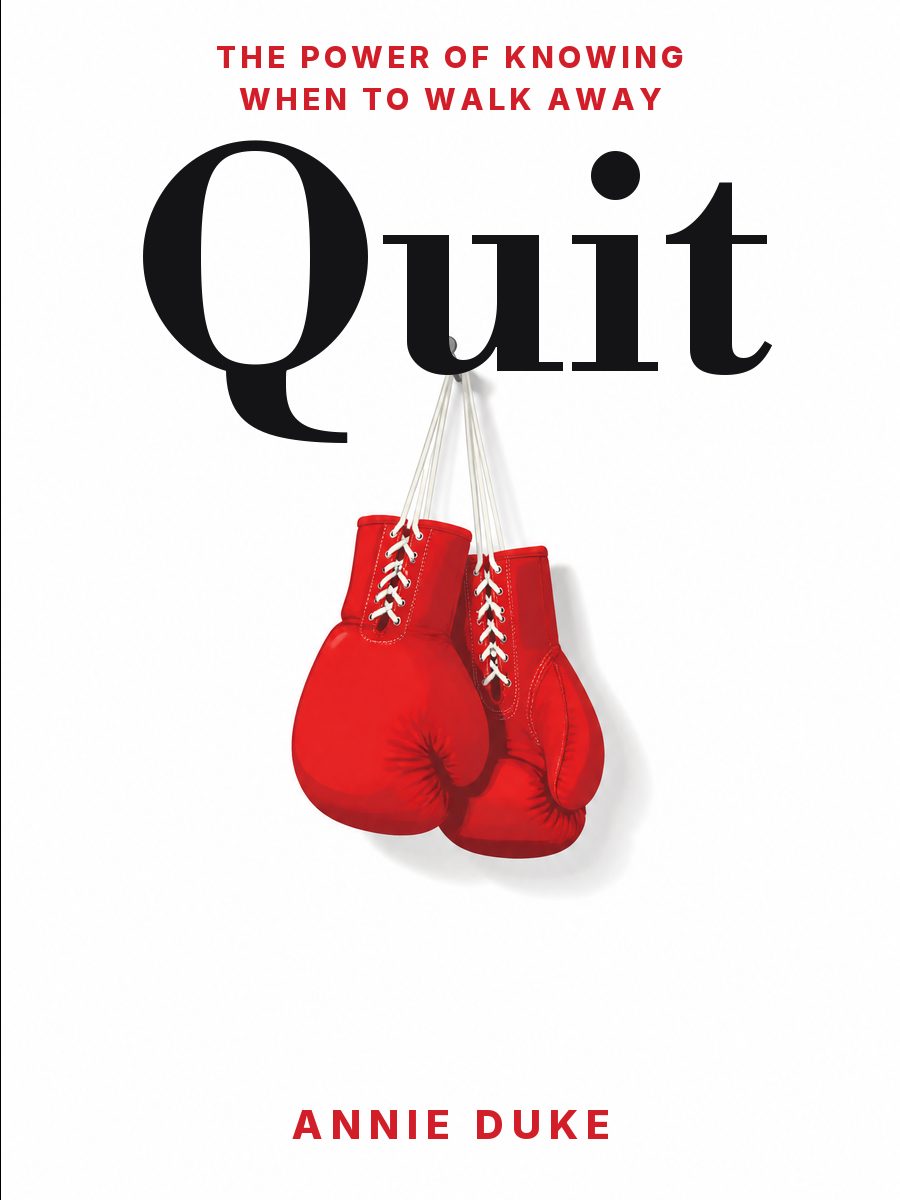 Quit: The Power of Knowing When to Walk AwayAnnie Duke
We are taught that winners never quit. Annie Duke, a poker champion and decision scientist, shows the opposite: knowing when to quit is what sets apart the people who end up winning. You will learn why walking away is so hard even when everything is clear, and how to agree with yourself in advance on the moment to…
Question 1 of 5
A project hasn't grown for a year, and quitting now feels hasty. How does Duke see this feeling?
Show the answer
Right answer: It's a sign you've spotted the problem in time
The right moment to quit comes while there's still hope. That's why it almost always feels early, and the feeling of "too soon" is no reason to stay.
Question 2 of 5
You bought a stock at fifty, it's now worth forty, and you hate to sell. What question does the book suggest?
Show the answer
Right answer: Would I buy it today for those forty in cash?
The ten is already lost whatever you choose. By holding the stock, you're in effect buying it again every day, and you only need to decide about the money that's left.
Question 3 of 5
You're starting a new venture. By the rule "monkey first, pedestal later," where should you start?
Show the answer
Right answer: With the hardest, most uncertain part that decides everything
If the main problem can't be solved, nothing else matters. By testing it first, you quit early and cheaply, without piling up extra costs.
Question 4 of 5
How does Duke suggest agreeing with yourself in advance about leaving a new job?
Show the answer
Right answer: Write down a state and a date: if it isn't so by then, I leave
Kill criteria are written before you start, while your head is cool. The simple form is a state and a date, so when the time comes you just check the facts.
Question 5 of 5
Why did Butterfield shut down the game Glitch, even though its audience was growing?
Show the answer
Right answer: It wasn't going to become big, and the time was worth more
It's worth walking away not only from failure but from mediocrity. The team's time could achieve more elsewhere, and Slack grew out of the chat.
Want all of the book's key ideas? Read or listen to its retelling in Livria.