
Book quiz
Rejection Proof: How I Beat Fear and Became Invincible Through 100 Days of Rejection Quiz
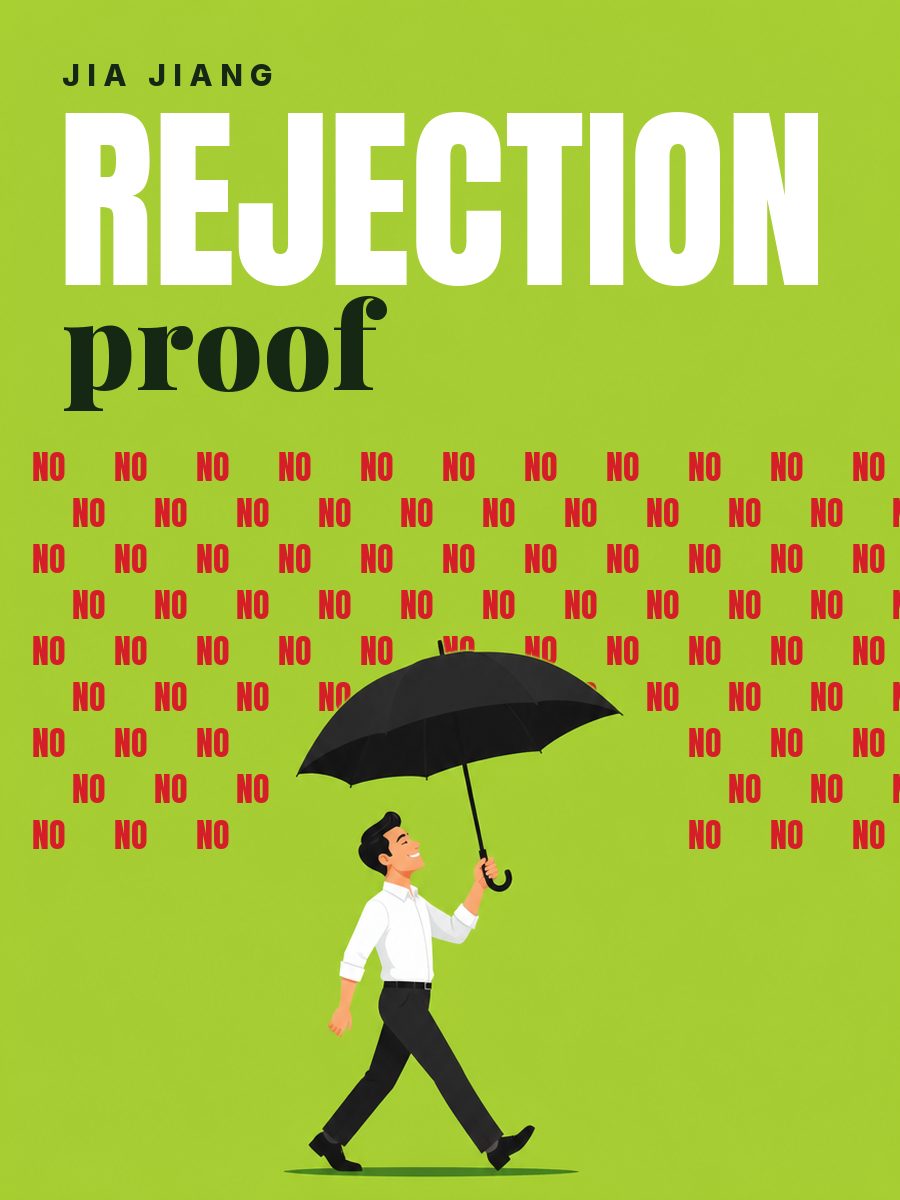 Rejection Proof: How I Beat Fear and Became Invincible Through 100 Days of RejectionJia Jiang
An entrepreneur who has feared rejection since childhood deliberately makes impossible requests for a hundred days: borrow a hundred dollars from a security guard, have doughnuts made in the shape of the Olympic rings, plant a flower in someone else’s yard. Half his requests unexpectedly receive a yes. You will learn…
Question 1 of 5
You ask for a favor, hear "No, why?" and walk away. What did Jiang realize about a day like this?
Show the answer
Right answer: It's a chance to explain the request and stay
On the first day, the security guard asked "why," and Jiang ran away. The rule he took from it: don't leave right after a "no," stay for one more sentence.
Question 2 of 5
You show an idea to two people you know, and both shrug. How does Jiang see this?
Show the answer
Right answer: It's just two opinions, ask more people
For Jiang, rejection is one person's opinion, shaped by timing, culture and mood. Rejection has a number: decide in advance how many "no"s you'll hear out.
Question 3 of 5
You ask your boss for a week of remote work and get turned down. What would Jiang do?
Show the answer
Right answer: Ask what's in the way, and ask for one day
Jiang's three moves after a "no": ask "why," retreat to a smaller request, and negotiate rather than argue. That way "yes" still has a chance.
Question 4 of 5
Your request sounds unusual. What technique helped Jiang win over the Starbucks manager?
Show the answer
Right answer: Name the other person's doubt out loud first
Jiang asked the manager: "Is this weird?" and the man relaxed. A doubt named out loud first stops getting in the way: the other person sees you understand them.
Question 5 of 5
You don't ask for a raise, since the answer is obvious anyway. What would Jiang say?
Show the answer
Right answer: Only the person you ask knows the answer
After the doughnuts shaped like the Olympic rings, Jiang realized that more often we turn ourselves down without asking. About half of his requests ended in a yes.
Want all of the book's key ideas? Read or listen to its retelling in Livria.