
Book quiz
Rising Strong: The Reckoning. The Rumble. The Revolution. Quiz
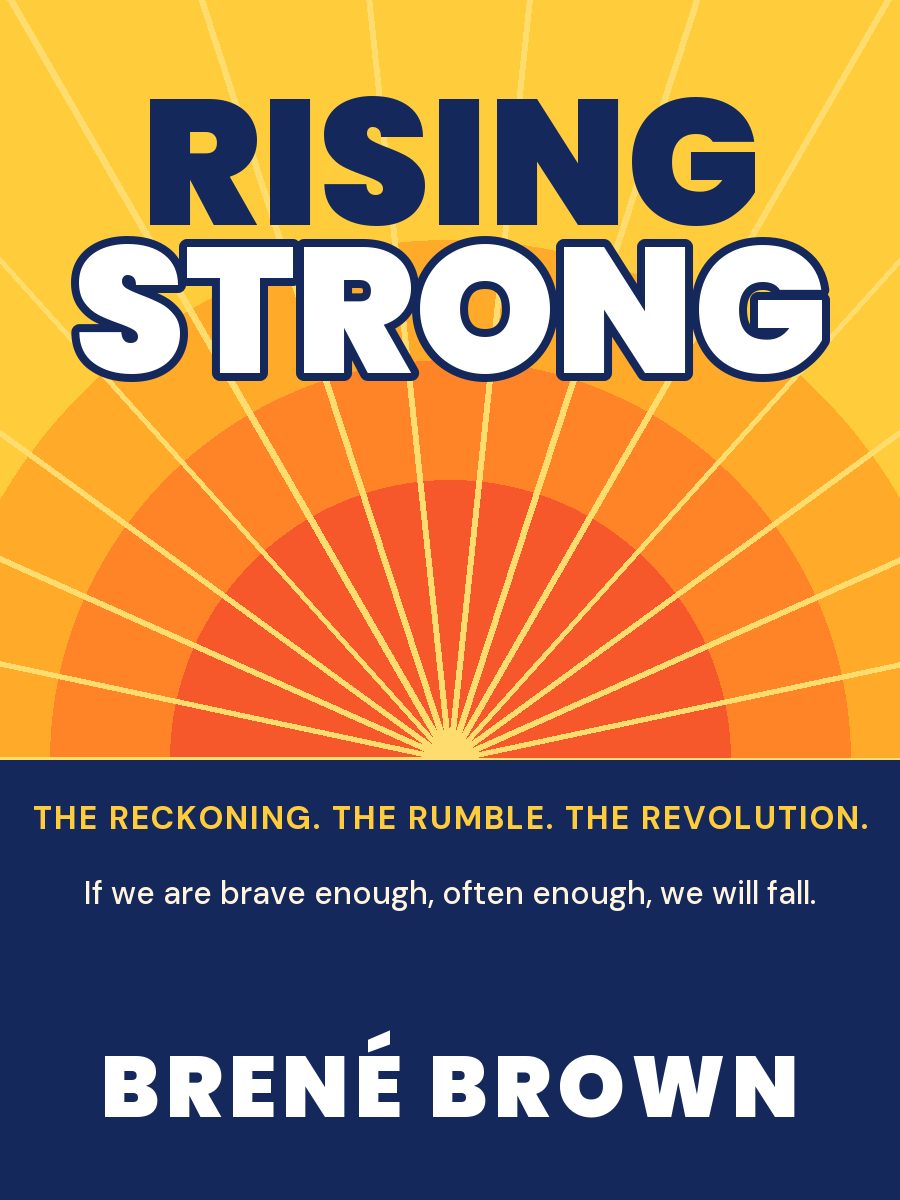 Rising Strong: The Reckoning. The Rumble. The Revolution.Brené Brown
Stories about courage usually stop at the leap. Brené Brown studied what happens after the fall, and found that people who get up stronger than they were tend to walk the same path. She breaks it into three steps and shows how to catch yourself in an imagined hurt before it damages a relationship.
Question 1 of 5
People tell you: "Failure is valuable experience, a stepping stone to success." According to Brown, what do such speeches leave out?
Show the answer
Right answer: That falling hurts, and something has to be done with that pain
Brown calls this gold-plating grit: shiny on the outside, empty inside. The shame, fear and loneliness after a failure are the part of the road you'll have to walk.
Question 2 of 5
Someone close to you answers curtly and coldly, and a hurtful version forms in your head. What does Brown suggest?
Show the answer
Right answer: Say: "The story I'm making up is this"
The phrase honestly calls a guess a guess: you're not accusing, you're showing what's going on in your head and letting the other person tell their truth.
Question 3 of 5
According to Brown, why does the brain make up a hurtful version of events so quickly?
Show the answer
Right answer: It rewards us for a finished story, not for accuracy
Drawing on Burton, Brown writes that the brain releases dopamine when a story comes together with a beginning, middle and end. Fears fill the gaps in the facts.
Question 4 of 5
Brown's roommate smoked and wiped her sticky fingers on the couch. What conclusion did Brown come to in the end?
Show the answer
Right answer: The most compassionate people hold clear boundaries
Brown saw her mistake: she didn't ask for a separate room and silently piled up resentment. Her formula: boundaries, honesty and generosity about other people's intentions.
Question 5 of 5
Olivia always helps her friends, but when she gets sick herself, she doesn't text anyone. What does Brown see in this?
Show the answer
Right answer: Self-worth tied to the role of helper
Whoever judges themselves for needing help also judges those they help. For Brown, asking for help takes no less courage than offering it.
Want all of the book's key ideas? Read or listen to its retelling in Livria.