
Book quiz
SPQR: A History of Ancient Rome Quiz
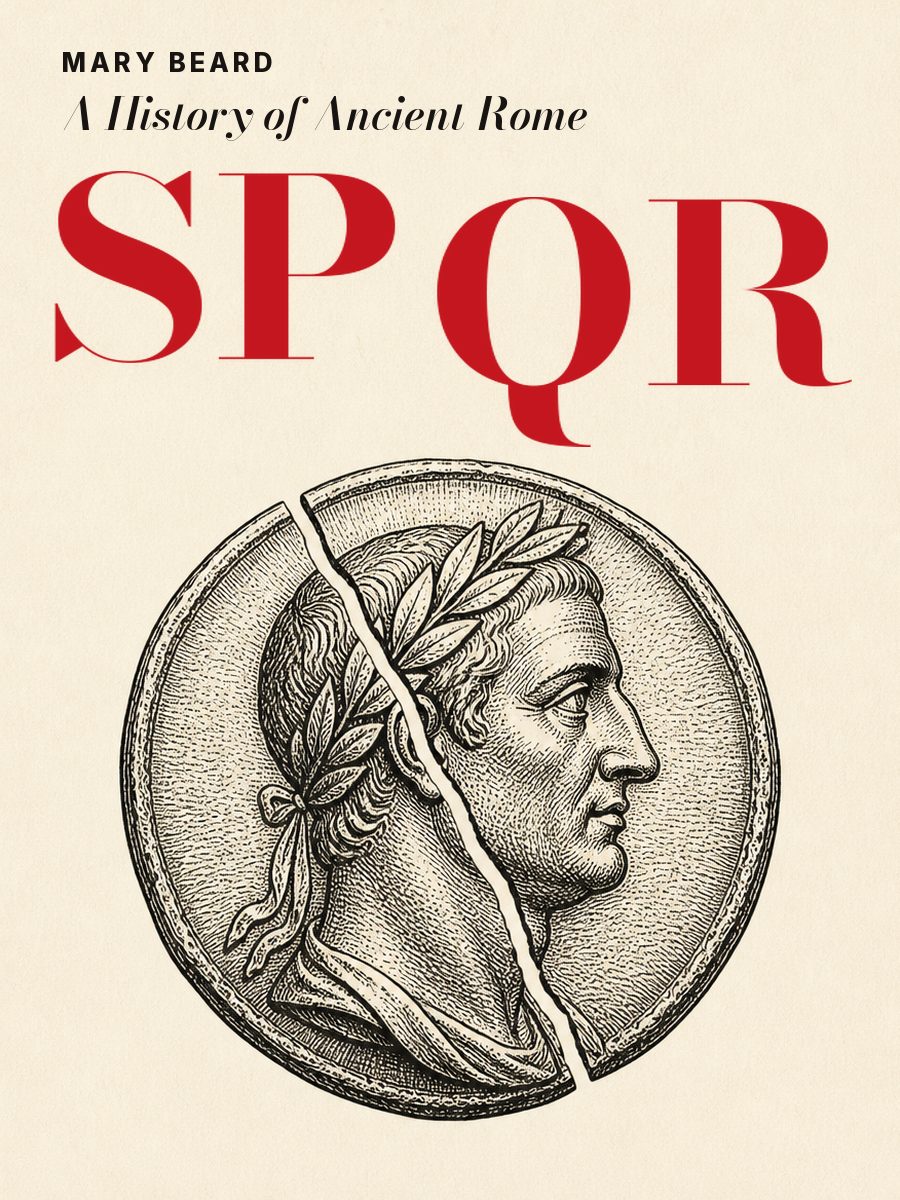 SPQR: A History of Ancient RomeMary Beard
How did an unremarkable little town in central Italy become a power on three continents? The British historian Mary Beard tells the story of a thousand years of Roman history, from the legend of Romulus to the year 212, when every free inhabitant of the empire became a citizen. She looks for the other side of every…
Question 1 of 5
The news is loudly describing a politician's villainy, and everything comes from his rival. According to Beard, what should you ask first?
Show the answer
Right answer: Who told the story and what they gained
Almost everything about Catiline's conspiracy was told by the winner, Cicero. Beard checks such accounts against other evidence, coins for example.
Question 2 of 5
A friend insists one country became great because its people were naturally warlike. What would Beard say about Rome?
Show the answer
Right answer: Its neighbors fought just as much
According to Beard, Rome stood out not for its temperament but because it turned the defeated into allies and took soldiers from them.
Question 3 of 5
A company lost a big tender, but hundreds of partners are ready to help it with people. What from Roman history does this recall?
Show the answer
Right answer: Rome after Cannae
After the rout at Cannae, Beard believes, any other state would have surrendered. Rome held on thanks to its allies, who kept sending men.
Question 4 of 5
A family proudly tells a legend about an ancestor who was a bandit. How would Beard look at it?
Show the answer
Right answer: As a story about the storytellers
For centuries the Romans retold the unflattering legend of Romulus and argued about themselves through it. Beard reads a myth as a portrait of those who retell it.
Question 5 of 5
Your neighbor is sure that a change of leader in the capital will instantly change his life. What would Beard say about the Romans?
Show the answer
Right answer: Their lives depended little on him
According to Beard, the structure of Roman power stayed stable for almost two hundred years, while ordinary people cared more about work, debts and health.
Want all of the book's key ideas? Read or listen to its retelling in Livria.