
Book quiz
The 12 Week Year: Get More Done in 12 Weeks than Others Do in 12 Months Quiz
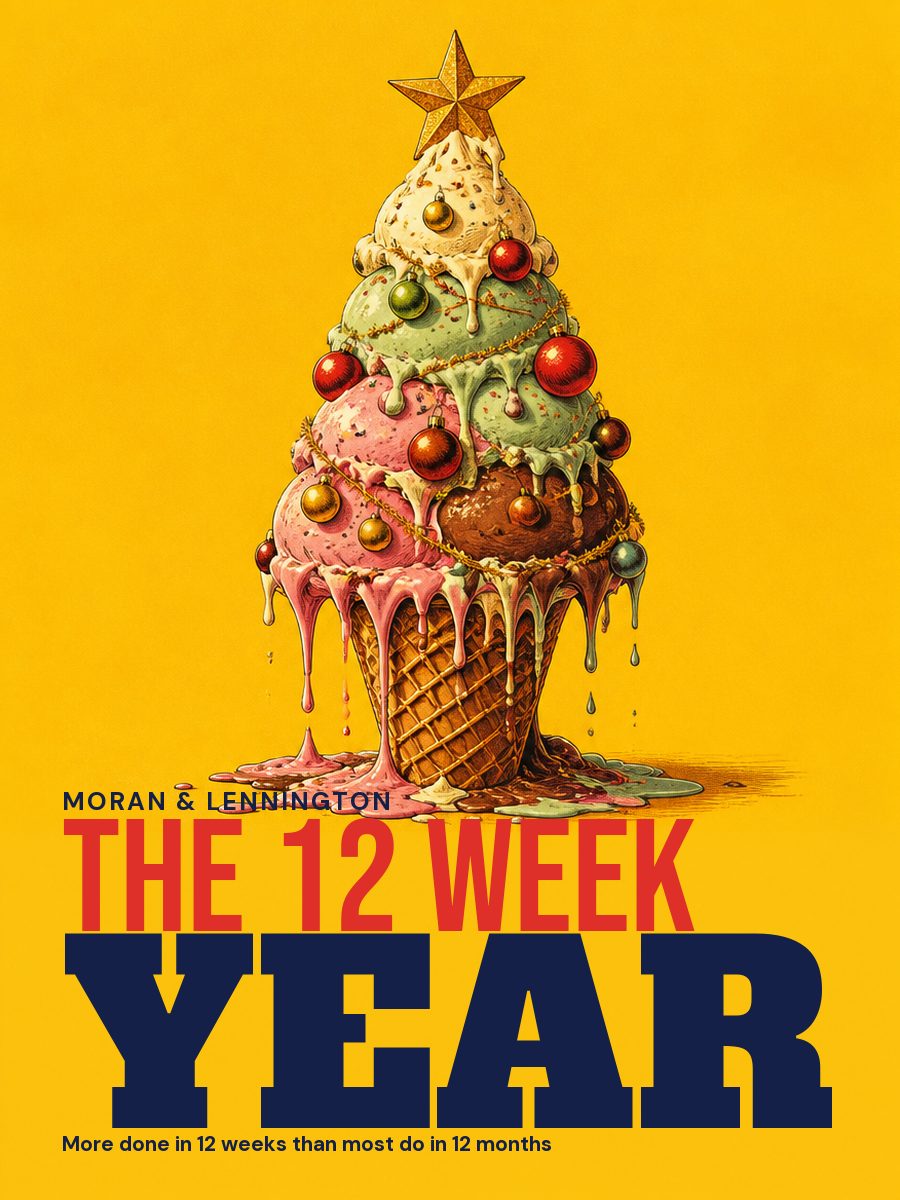 The 12 Week Year: Get More Done in 12 Weeks than Others Do in 12 MonthsBrian P. Moran, Michael Lennington
Every January it feels as if December is a long way off, so the important things get put off. Brian Moran and Michael Lennington suggest treating twelve weeks as a year, not twelve months. The book shows how to plan a year like that, measure what you actually do each week, and keep going when it gets hard.
Question 1 of 5
It's March, you're behind on your annual plan, and you're not worried. What do the authors suggest changing?
Show the answer
Right answer: Treat twelve weeks as a year
Annualized thinking creates the feeling that there's still plenty of time. In a twelve-week year the deadline is always close, and each week counts like a month.
Question 2 of 5
In week five of a new project, you want to drop everything. How does the book explain this?
Show the answer
Right answer: It's the valley of despair, a normal stage of change
In the emotional cycle of change, informed pessimism is followed by the valley of despair, where many give up. Going back to your vision helps.
Question 3 of 5
You spend the whole day sorting email and small errands. Which tool from the book helps your main work?
Show the answer
Right answer: A strategic block: three hours with no calls or email
Small stuff crowds out the important if the important has no time of its own. Emails are gathered into a buffer block, and once a week three hours go only to what matters.
Question 4 of 5
According to Moran and Lennington, what's the main thing to measure in the weekly score?
Show the answer
Right answer: The share of planned actions you completed
Actions are in your hands, while the outcome also depends on others. Whoever consistently completes 85% of their tactics each week will most likely reach the goal.
Question 5 of 5
According to the book, how is commitment different from interest?
Show the answer
Right answer: Commitment accepts no excuses, only results
Interest acts when it's convenient. Commitment has a price, and the authors advise naming it in advance and honestly deciding whether it's worth it.
Want all of the book's key ideas? Read or listen to its retelling in Livria.