
Book quiz
The Confidence Gap: A Guide to Overcoming Fear and Self-Doubt Quiz
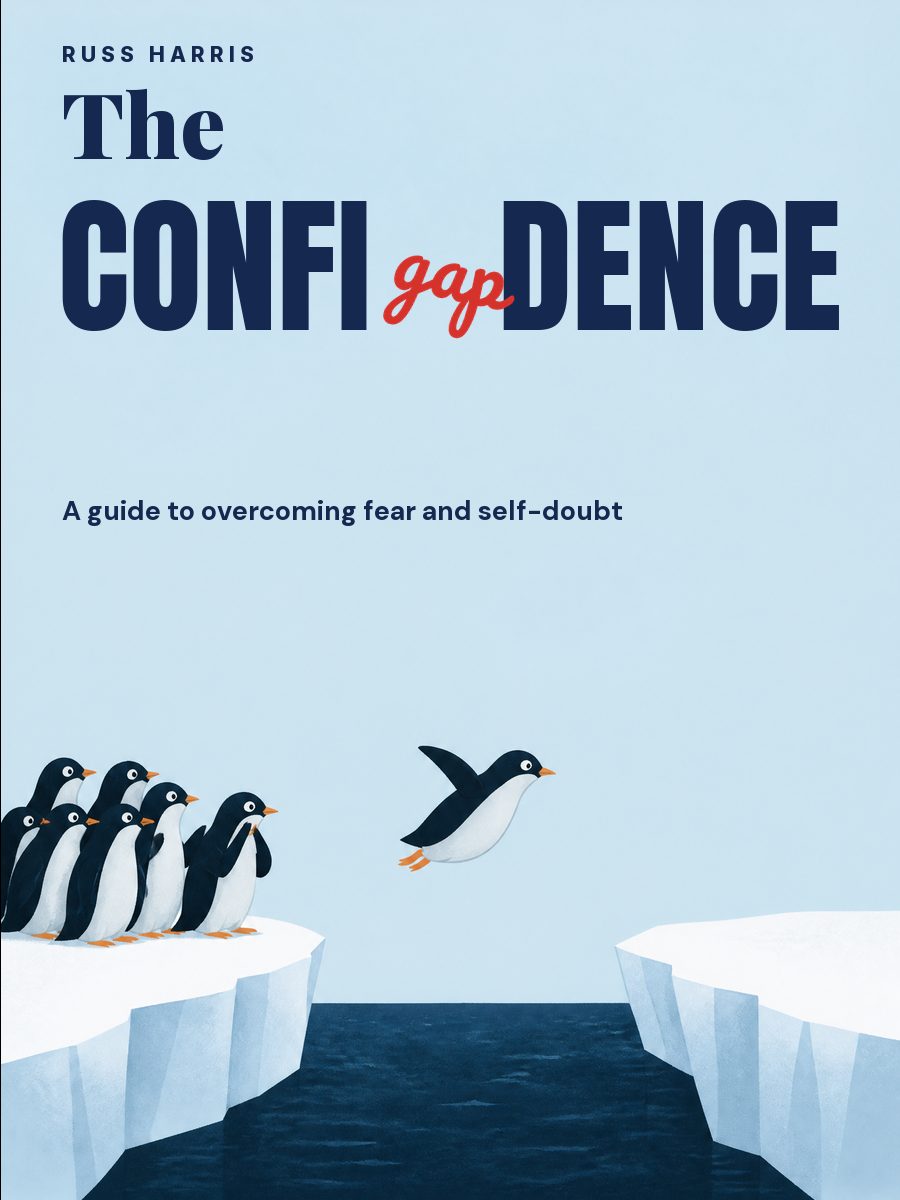 The Confidence Gap: A Guide to Overcoming Fear and Self-DoubtRuss Harris
Many of us wait to feel confident before we finally begin. Russ Harris, a doctor and therapist, explains why you could wait for that moment your whole life. He shows how to act alongside fear, step back from thoughts about your own worthlessness and lean on your values, so that the feeling of confidence arrives after…
Question 1 of 5
For two years you've been waiting to feel more confident before you pitch your project. What does Harris say?
Show the answer
Right answer: Action comes first, and the feeling of confidence follows
You can't switch a feeling on by willpower, but action is always available. Calm comes after the tenth conversation, not before the first.
Question 2 of 5
The thought "I'm a loser" is playing in your head again. What does Harris suggest doing with it?
Show the answer
Right answer: Step back from it, for example by singing it to a silly tune
This is defusion: the thought becomes what it really is, a string of words. You don't need to argue with it, only ask whether it's helpful.
Question 3 of 5
Before a talk your heart pounds and your palms sweat. How does Harris suggest you see this?
Show the answer
Right answer: As your body getting ready to help you, not breaking down
It's the ancient fight-or-flight response. What gets in the way is not the fear itself but how we handle it: fighting it, hiding it, giving up the task.
Question 4 of 5
In the morning you have no motivation at all to go to the gym. What question does Harris suggest asking yourself?
Show the answer
Right answer: "I have no motivation, but am I willing to act?"
Motivation is a feeling: it comes and goes. Willingness is a decision, and you can make it right now.
Question 5 of 5
Your talk went badly, and in the evening you feel awful. Which of these is part of Harris's steps after a failure?
Show the answer
Right answer: Find what did work, and be kind to yourself
Harris advises unhooking from the thought, making room for the pain, being kind to yourself, and then finding what worked and the lesson. Jump straight to lessons, and the pain stays unprocessed.
Want all of the book's key ideas? Read or listen to its retelling in Livria.