
Book quiz
The Creative Act: A Way of Being Quiz
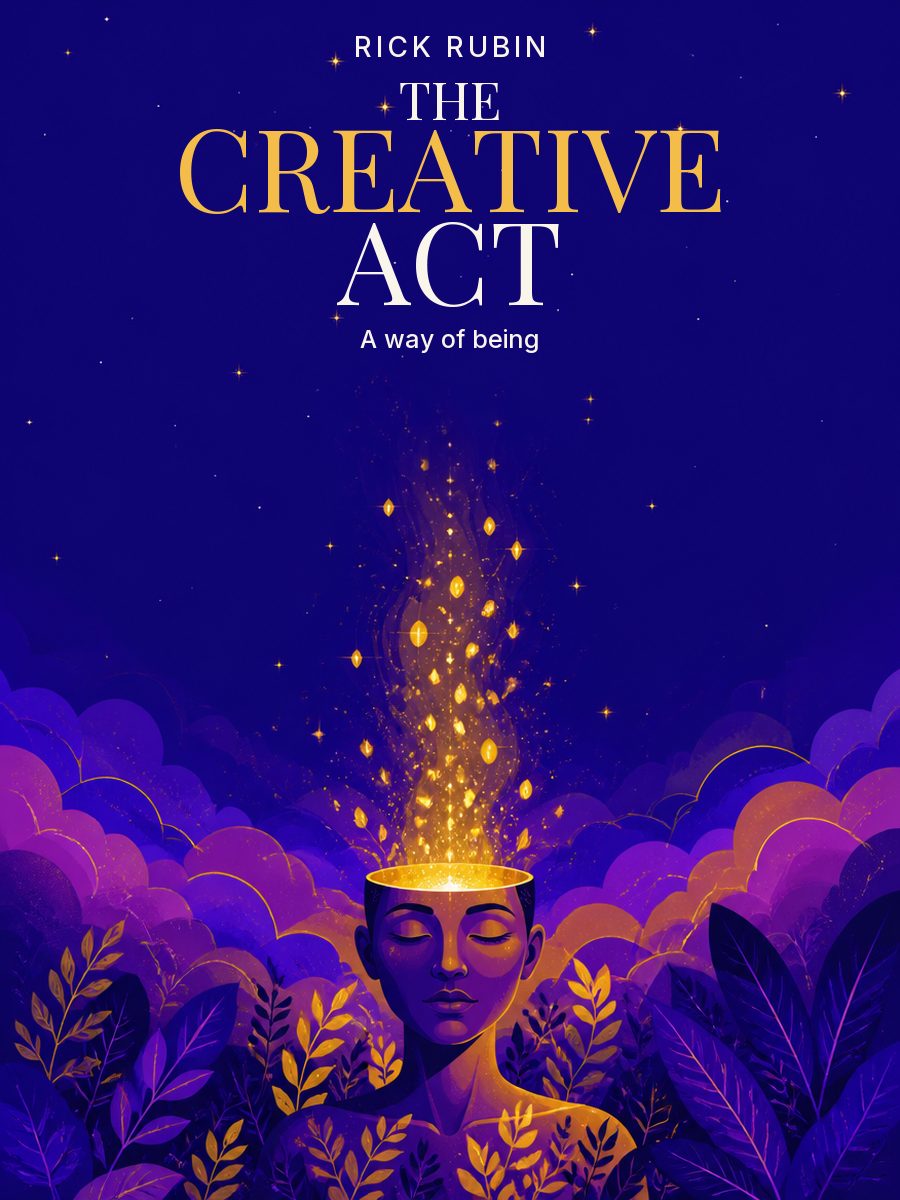 The Creative Act: A Way of BeingRick Rubin
We tend to think creativity is a rare gift for the chosen few. One of the most influential music producers in the world believes the opposite: it is a way of living and noticing the world, open to everyone. Rick Rubin shows where ideas come from, how to gather them without judging, and how to finish work that never…
Question 1 of 5
You think creativity isn't for you: you have no talent. What does Rubin call the main creative skill?
Show the answer
Right answer: Awareness: noticing what people usually miss
For Rubin, what sets an artist apart isn't talent but attention: they see things in the familiar that others stopped looking at long ago.
Question 2 of 5
You've been struggling with a problem for an hour, and no idea comes. What does the book advise?
Show the answer
Right answer: Stop pushing and switch activities: take a walk or wash the dishes
Rubin compares the artist to an antenna: an idea can't be produced by effort, and strain drowns out the faint signal. Let go, and the thought often comes by itself.
Question 3 of 5
On the bus you hear a phrase that catches you, but it seems silly. What would Rubin have you do?
Show the answer
Right answer: Write it down without judging: at this stage the seed must be kept
At the seed stage, Rubin advises turning off the inner critic: a seed doesn't have to be good, it has to be noticed and kept. You judge later.
Question 4 of 5
You're writing a birthday message and delete every first line. What mistake does the book see here?
Show the answer
Right answer: Starting with selection instead of first throwing out many options
Rubin splits the work into phases and asks you not to mix them up: experimentation needs an abundance of options, and selection comes later, at the craft stage.
Question 5 of 5
For years you've been polishing a piece of work and never showing it. How does Rubin explain this?
Show the answer
Right answer: Endless polishing often hides a fear of showing what you've made
No work is ever perfect; finishing is a decision to let it go. For Rubin, endless polishing often means fear of others' judgment, not improvement.
Want all of the book's key ideas? Read or listen to its retelling in Livria.