
Book quiz
The E-Myth Revisited Quiz
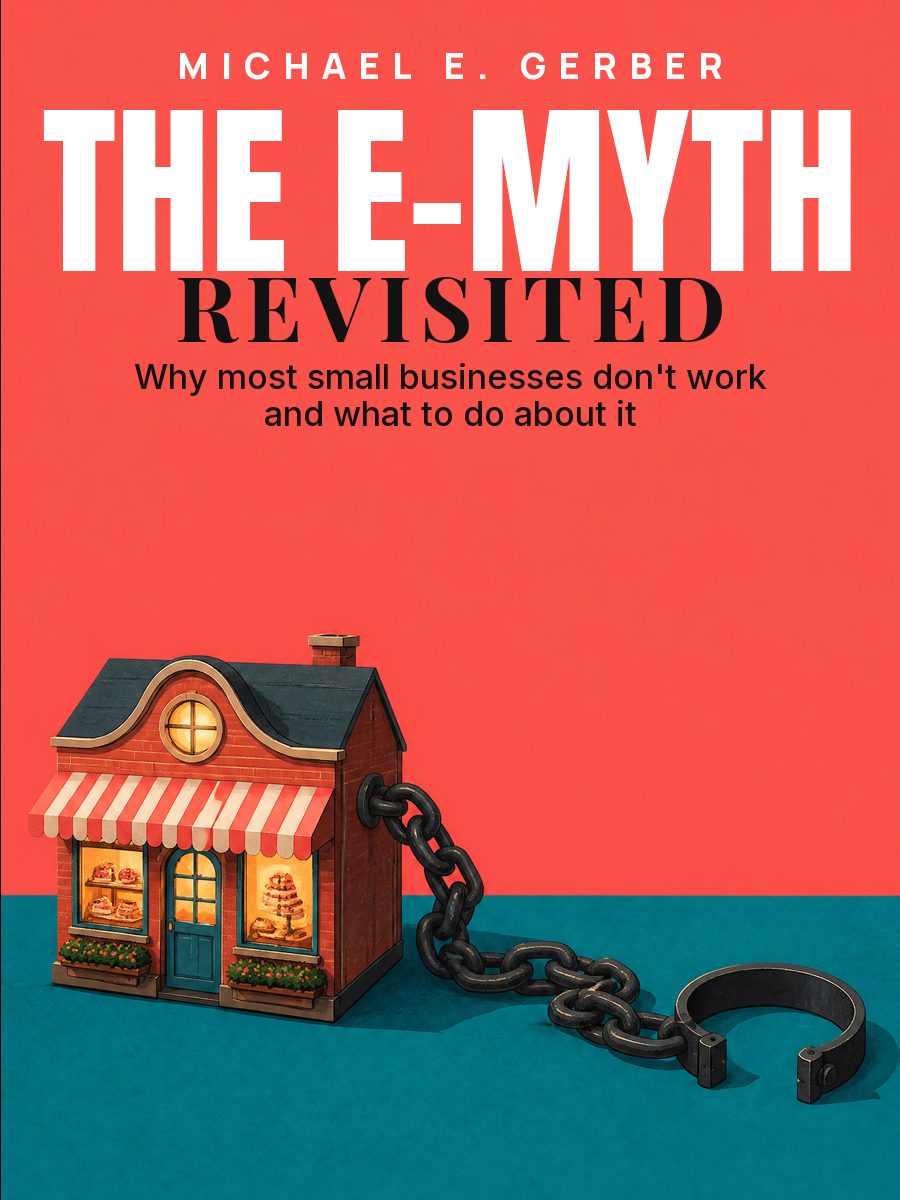 The E-Myth RevisitedMichael E. Gerber
Why can a baker who bakes wonderfully go broke in her own bakery? Michael Gerber explains that small firms are usually started by craftspeople, not entrepreneurs, and that this is exactly what ruins them. He shows how to see your business as a product and build it so that it works without you.
Question 1 of 5
An excellent baker leaves her boss and opens her own bakery. Which assumption does Gerber call fatal?
Show the answer
Right answer: If you understand the work, you understand the business
A craftsman knows how to do the work, but not how to find customers, keep the books or train people. And in your own business there's more of that work than baking.
Question 2 of 5
An owner hired a bookkeeper, handed him the job without any explanation and left. How does Gerber see this?
Show the answer
Right answer: Escape, not delegation: you have to hand over the way the work is done
This is Management by Abdication. When the way the work is done exists only in the owner's head, there's nothing to hand over to the helper, and things soon go wrong.
Question 3 of 5
Your firm is just you so far. How does Gerber advise seeing it?
Show the answer
Right answer: As a prototype that can be copied thousands of times
The thought experiment of five thousand copies makes you work on the business, not just in it: describe everything so each copy works like the original.
Question 4 of 5
Where does the seven-step business development program begin?
Show the answer
Right answer: With answering what you want your life to look like
The first step, the Primary Aim, isn't about business at all. A business is only a tool for living, and without a clear aim the business will decide for you.
Question 5 of 5
At a small hotel, the next morning they already know what you like. How does Gerber explain this?
Show the answer
Right answer: Every step is written down, and a system works, not talent
The manager wrote down how to greet a guest and what to note about their habits. The people there were ordinary, and the result was special because it rested on a system.
Want all of the book's key ideas? Read or listen to its retelling in Livria.