
Book quiz
The Emperor of All Maladies: A Biography of Cancer Quiz
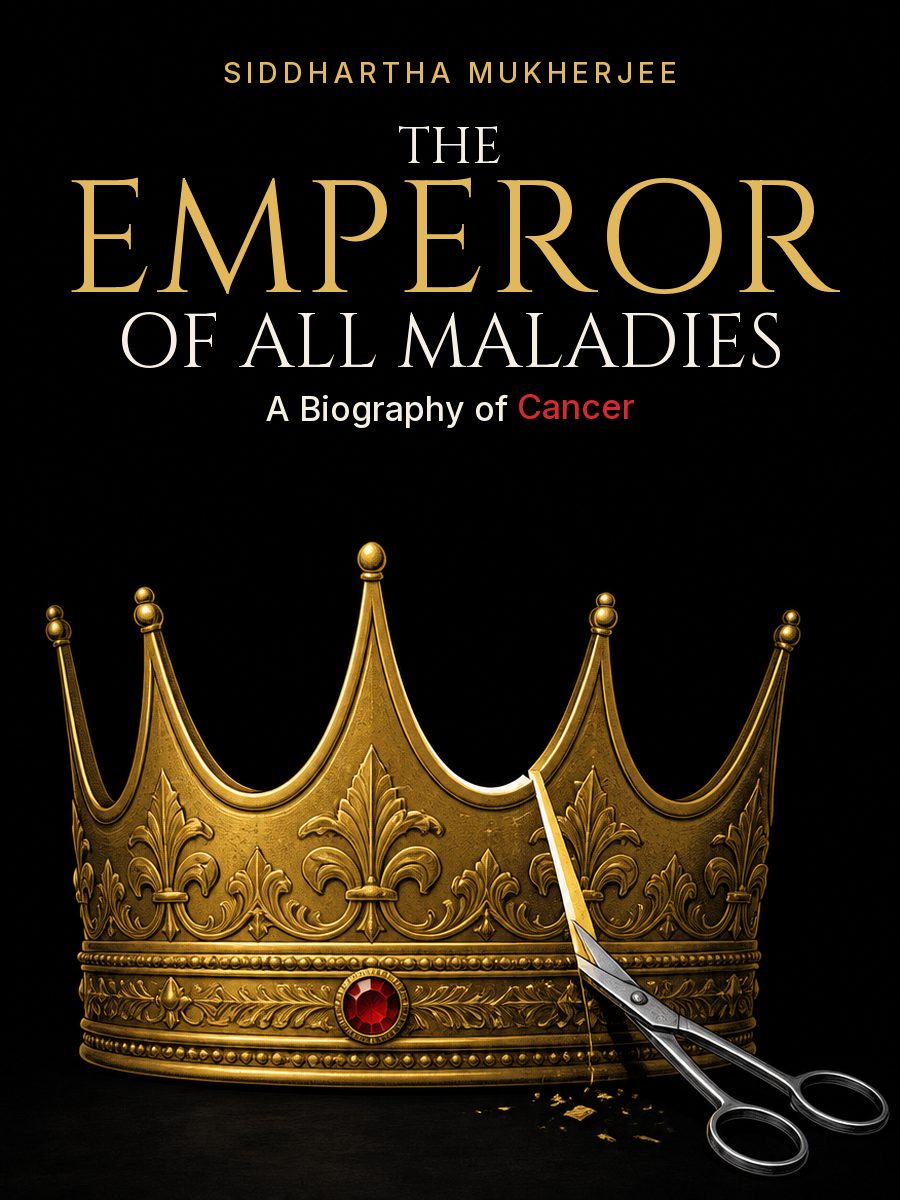 The Emperor of All Maladies: A Biography of CancerSiddhartha Mukherjee
Four thousand years ago an Egyptian physician described a tumor and wrote, honestly: there is no treatment. The oncologist Siddhartha Mukherjee tells the story of cancer as the biography of a living adversary: from ancient papyri and brutal operations to the first drugs, the fight with the tobacco companies, and a…
Question 1 of 5
According to Mukherjee, why did almost nobody get cancer in old family stories?
Show the answer
Right answer: Few people lived to the old age where cancer waits
Cancer is mostly a disease of aging. While people died young of infections, hunger and war, they didn't live long enough to get it; with long lives it moved to the front.
Question 2 of 5
What did Bernard Fisher's study of radical mastectomy show?
Show the answer
Right answer: It didn't extend life compared with gentler operations
Women were assigned to different operations by lot. If the cancer had already spread, cutting wider was useless, and if it hadn't, less was enough.
Question 3 of 5
The remissions in children after Farber's aminopterin were temporary. So why does this work matter?
Show the answer
Right answer: It proved a substance can push cancer back
The disease came back, but Farber showed the main thing: a chemical can push cancer back. That's where chemotherapy begins.
Question 4 of 5
Why was it a combination of drugs that made childhood leukemia curable?
Show the answer
Right answer: A cell has a hard time adapting to every blow at once
Cells that survived one drug multiplied again. Several drugs hit cells in different ways, and adapting to all of them at once is hard.
Question 5 of 5
You see a headline about a breakthrough in cancer treatment. Which question from the book is worth asking?
Show the answer
Right answer: Does it cure, or only extend life
The book suggests three questions: which cancer exactly, what it was compared with, and whether the drug cures or extends life. Gleevec, for example, gives control, not always a cure.
Want all of the book's key ideas? Read or listen to its retelling in Livria.