
Book quiz
The End of Burnout: Why Work Drains Us and How to Build Better Lives Quiz
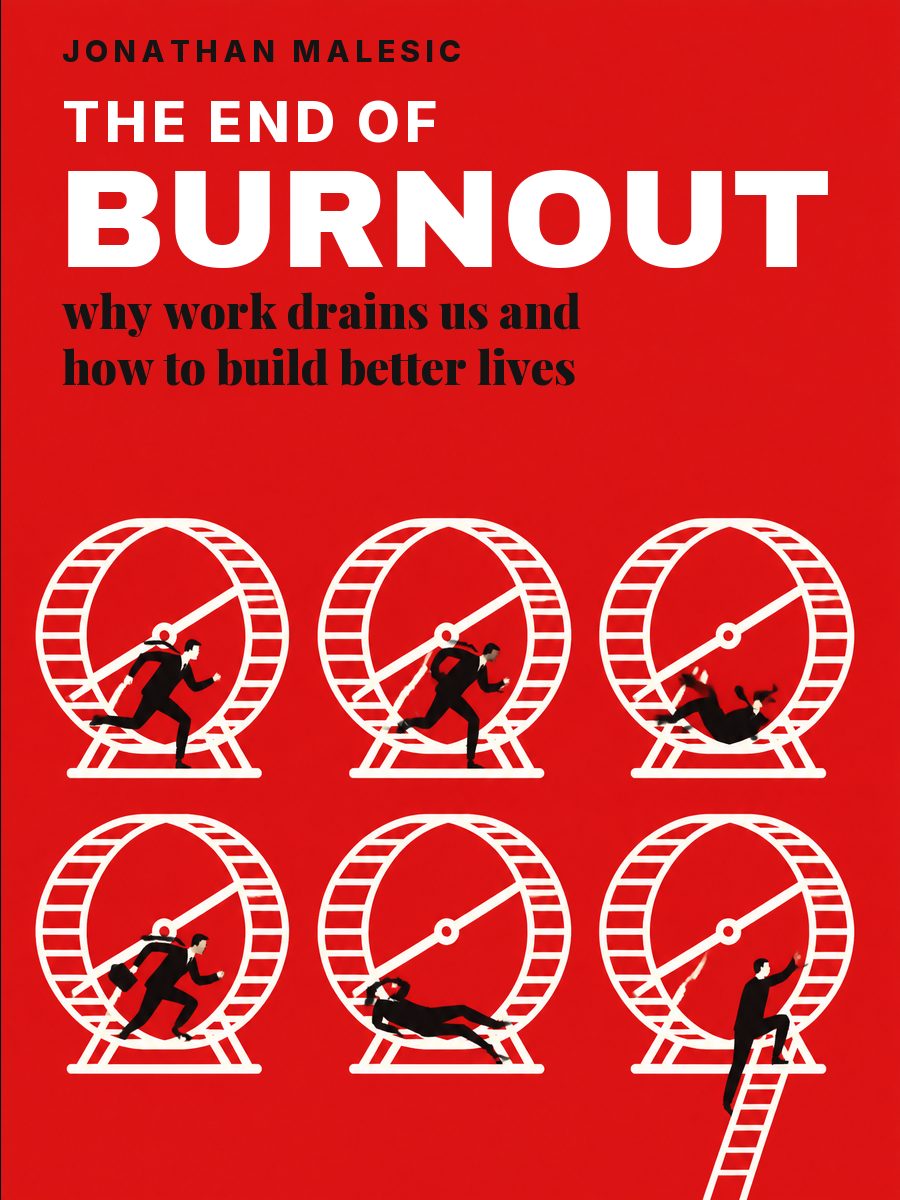 The End of Burnout: Why Work Drains Us and How to Build Better LivesJonathan Malesic
A professor with a job he can never lose realises one day that every morning he dreads going to his dream job. Jonathan Malesic quits, then works out what happened to him, and reaches an uncomfortable conclusion: a person lives through burnout, but the culture of work causes it. You will learn how to tell burnout…
Question 1 of 5
How does Malesic define burnout?
Show the answer
Right answer: As a chronic stretch between ideals and the reality of work
The rubber band between the dream and the daily grind holds while the gap is small. The key word is "chronic": one hard month isn't burnout yet.
Question 2 of 5
According to Malesic, in whom was burnout first found in the 1970s?
Show the answer
Right answer: The most idealistic, who believed in their work most
The higher the ideal, the further it is from everyday work. It was found in counselors at helping services and lawyers who defended the poor.
Question 3 of 5
You turn down an extra project so you won't burn out. What does Malesic notice?
Show the answer
Right answer: The work doesn't vanish; it lands on a colleague
One person's no doesn't reduce the total work; it shifts it. That's why Malesic suggests fighting burnout at the level of the group.
Question 4 of 5
Why didn't working in a parking booth burn Malesic out?
Show the answer
Right answer: He expected nothing from it, so there was almost no gap
The booth promised neither dignity nor meaning in life. The gap between ideal and reality was almost zero, and he looked for a full life outside work.
Question 5 of 5
What can you take from monks who stop work when the bell rings?
Show the answer
Right answer: Set a shared limit in advance instead of relying on willpower
The limit is set in advance and for everyone, so it doesn't have to be fought for every day. A shared limit is easier to keep than a personal one.
Want all of the book's key ideas? Read or listen to its retelling in Livria.