
Book quiz
The Future of Humanity: Terraforming Mars, Interstellar Travel, Immortality, and Our Destiny Beyond Earth Quiz
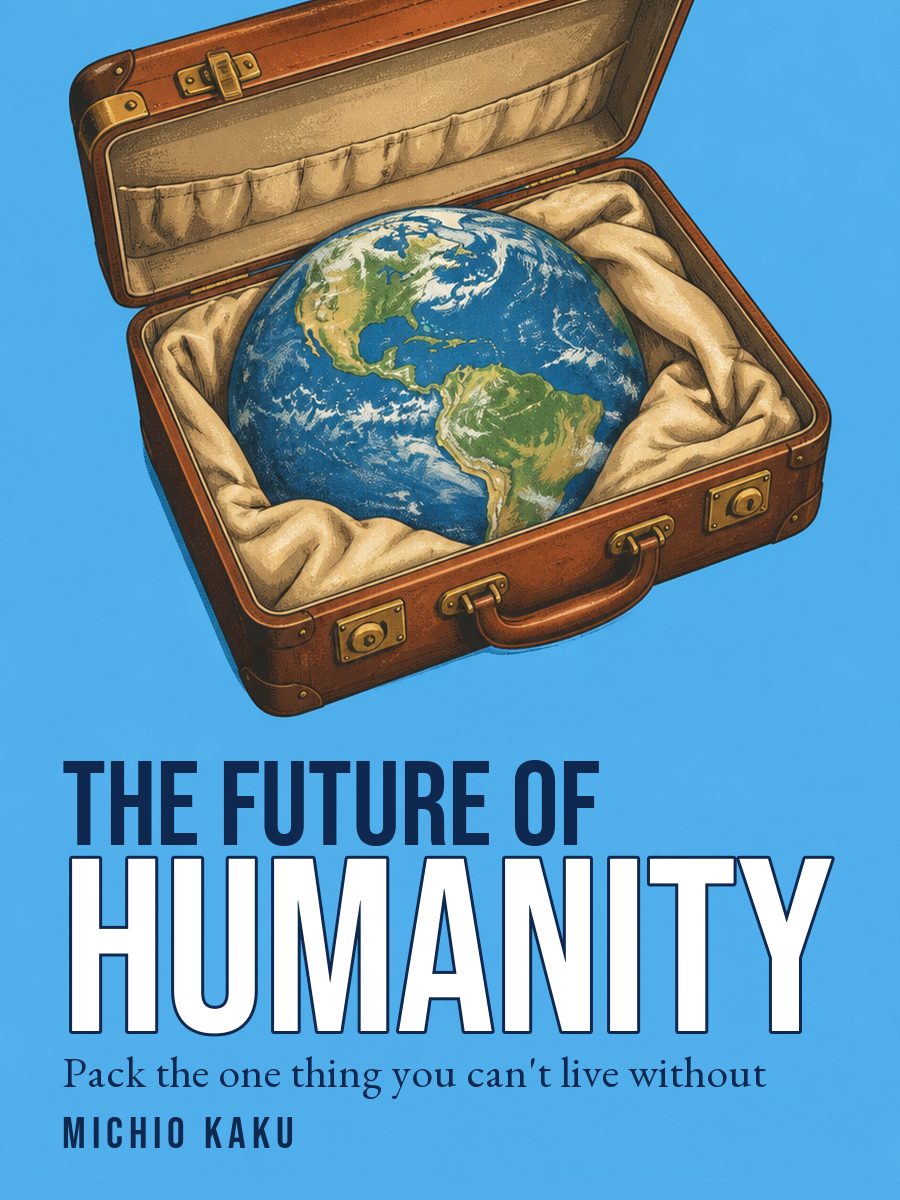 The Future of Humanity: Terraforming Mars, Interstellar Travel, Immortality, and Our Destiny Beyond EarthMichio Kaku
More than 99.9% of all species that ever lived on Earth have gone extinct. Physicist Michio Kaku believes humanity has a chance to escape their fate by becoming multiplanetary. Step by step he travels from the Moon and Mars to light sails and ideas about transferring consciousness, and each time he asks: does physics…
Question 1 of 5
Someone says of a new technology: "That's impossible." According to Kaku, what question should you ask?
Show the answer
Right answer: Which law of nature forbids it
Kaku divides the impossible into two kinds: forbidden by physics, and merely hard or expensive. If no law stands against it, it's a task for the future.
Question 2 of 5
Why did The New York Times mock Goddard in 1920, and what did it get wrong?
Show the answer
Right answer: It thought a rocket would have nothing to push against in a vacuum
The paper decided a rocket would have nothing to push against in a vacuum. But a rocket is pushed by the gases it throws backward, and that needs no air.
Question 3 of 5
According to Kaku, what held back space flight most, even though physics didn't forbid it?
Show the answer
Right answer: Cost: the obstacle was economic
For Kaku, the first threat to space plans is cost. Private companies are learning to land stages and launch them again: physics isn't the problem, money is.
Question 4 of 5
Why does Kaku want a base near the Moon's poles?
Show the answer
Right answer: Its dark craters hold ice: water, air and fuel
Permanently dark craters near the poles hold water ice. Water gives you drinking water, oxygen to breathe and the ingredients of rocket fuel.
Question 5 of 5
According to Kaku, why could the move to a Type I civilization be the most dangerous?
Show the answer
Right answer: Our technology is already planetary, but our quarrels and prejudices are still tribal
Kaku sees the danger in the gap: humanity's power is already planetary in scale, while relations between people remain tribal.
Want all of the book's key ideas? Read or listen to its retelling in Livria.