
Book quiz
The Puzzler: One Man's Quest to Solve the Most Baffling Puzzles Ever, from Crosswords to Jigsaws to the Meaning of Life Quiz
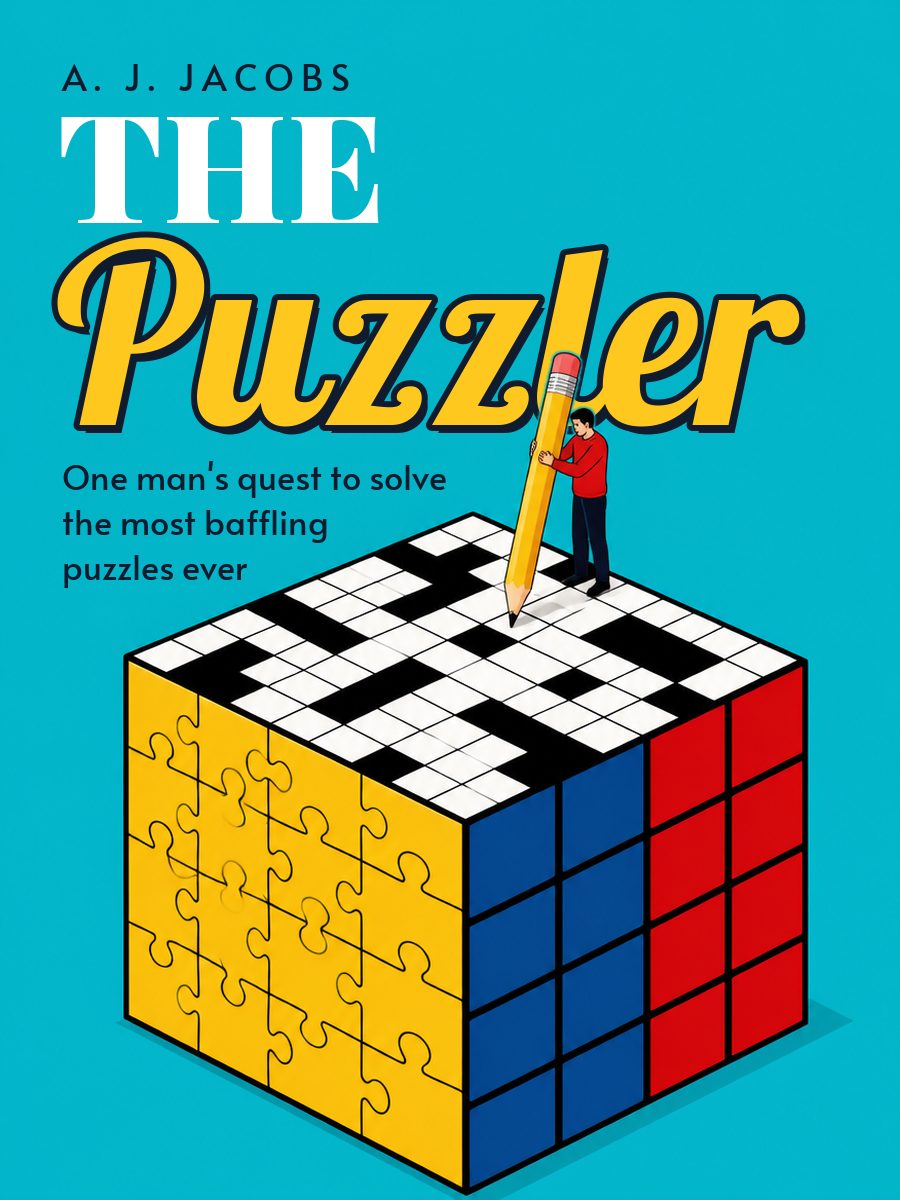 The Puzzler: One Man's Quest to Solve the Most Baffling Puzzles Ever, from Crosswords to Jigsaws to the Meaning of LifeA. J. Jacobs
A cipher on CIA grounds that has resisted decoding for thirty years, a Siberian team at the World Jigsaw Puzzle Championship, and a corn maze with emergency exits. A. J. Jacobs tried dozens of puzzles and came away with five techniques that also work in life. Here they are broken down into steps: replace anger with…
Question 1 of 5
Your boss has wrecked your deadlines for the third time this week. What does Jacobs advise first?
Show the answer
Right answer: Call it a puzzle and ask why
A problem is frightening, while a puzzle promises there's an answer. Anger gives you tunnel vision, while asking "why is this happening?" opens a conversation.
Question 2 of 5
For months you've been attacking a problem the same way. Which of Jacobs's techniques helps here?
Show the answer
Right answer: Turn it upside down and do the opposite
A man with a shovel digs up instead of down; Jacobs carries the hamper to the clothes. Swap what moves with what stays still.
Question 3 of 5
In a crossword, a word you've filled in doesn't fit the crossing words. What does a good solver do, according to Jacobs?
Show the answer
Right answer: Erases the word: an answer is only provisional
Good puzzlers don't fall in love with their hypotheses. An answer is provisional until the neighboring squares confirm it, and a mistake is new information.
Question 4 of 5
A huge project lies ahead, and it's unclear where to begin. Which of Clinton's techniques does Jacobs recommend?
Show the answer
Right answer: Start with what you're sure of
Clinton fills in a word he knows for certain and builds from there. Jacobs calls this a toehold: attacking the problem where it's weakest.
Question 5 of 5
A friend assembles random coincidences into a neat secret picture. What does Jacobs call this?
Show the answer
Right answer: Apophenia: a pattern where there is none
Apophenia is the habit of seeing a signal in noise, like a face on a piece of toast. According to Jacobs, conspiracy theories like QAnon rest on it.
Want all of the book's key ideas? Read or listen to its retelling in Livria.