
Book quiz
The Upward Spiral: Using Neuroscience to Reverse the Course of Depression, One Small Change at a Time Quiz
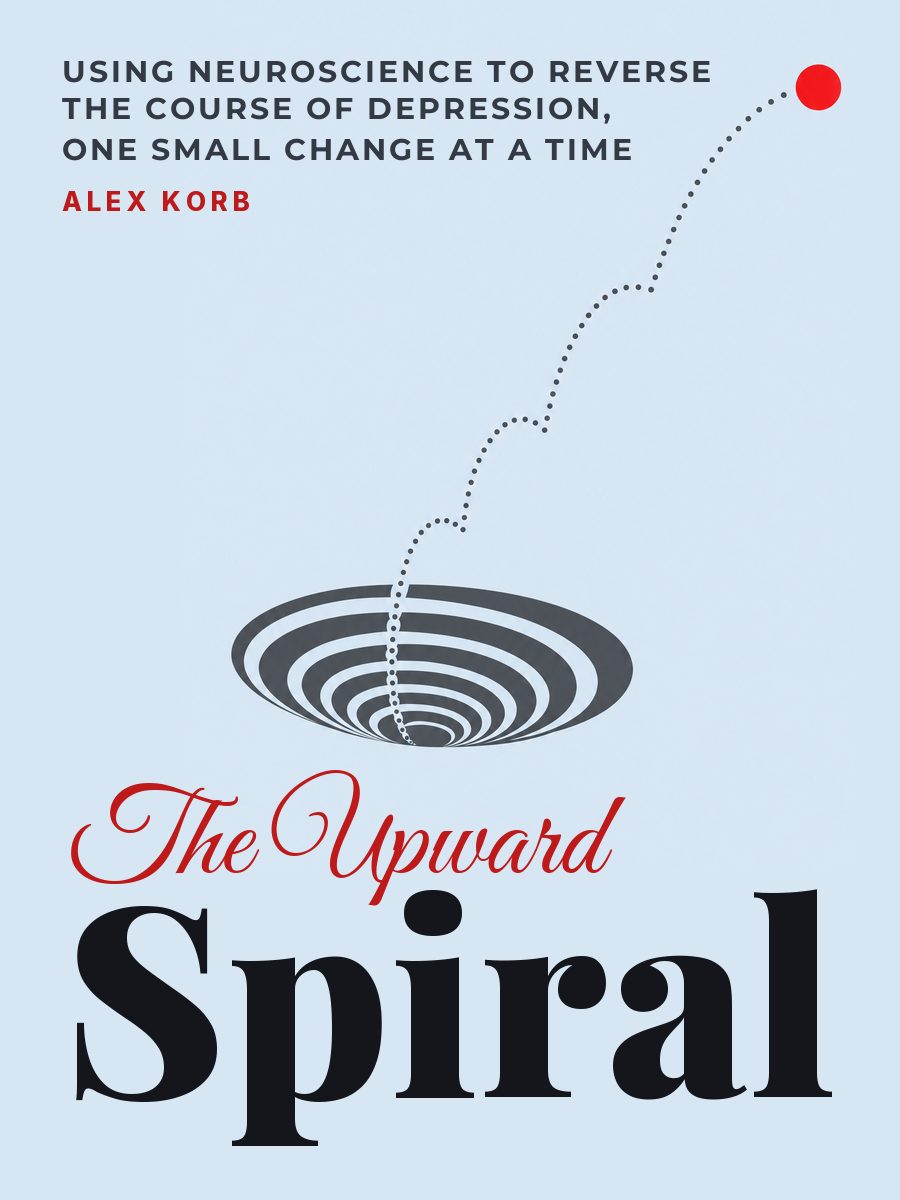 The Upward Spiral: Using Neuroscience to Reverse the Course of Depression, One Small Change at a TimeAlex Korb
Why is it so hard to do even the things that would surely help, when you are in a bad patch? Neuroscientist Alex Korb explains depression as a spiral in which thoughts, feelings and habits drag each other down. You will learn which circuits of the brain are involved, and why a small change can turn the spiral upward…
Question 1 of 4
It's the night before a meeting, and "what if" keeps spinning in your head. Following Korb's advice, where do you start?
Show the answer
Right answer: Put your feeling into words
When you name an unpleasant emotion, the prefrontal cortex switches on, and the amygdala, which sets off anxiety, calms down.
Question 2 of 4
It was a hard week, and an old habit came back. How does Korb explain this slip?
Show the answer
Right answer: Stress handed the wheel to the striatum
Under stress, control passes to the part of the brain that makes familiar actions automatic, which is why old habits come back.
Question 3 of 4
Choosing a gift has taken all evening, and you have twenty tabs open. What would Korb advise?
Show the answer
Right answer: Take three options and decide
Chasing the best turns choosing into a source of anxiety, while a good enough decision made quickly makes the situation manageable.
Question 4 of 4
You have no energy, and an inner voice keeps saying a walk won't change anything. How should you deal with it?
Show the answer
Right answer: Thank it for its opinion and go out
The verdict "nothing will help" comes from a brain in a downward spiral: it's a forecast from its circuits, not a fact about the world, and it's easier to test with a walk.
Want all of the book's key ideas? Read or listen to its retelling in Livria.