
Book quiz
When Genius Failed: The Rise and Fall of Long-Term Capital Management Quiz
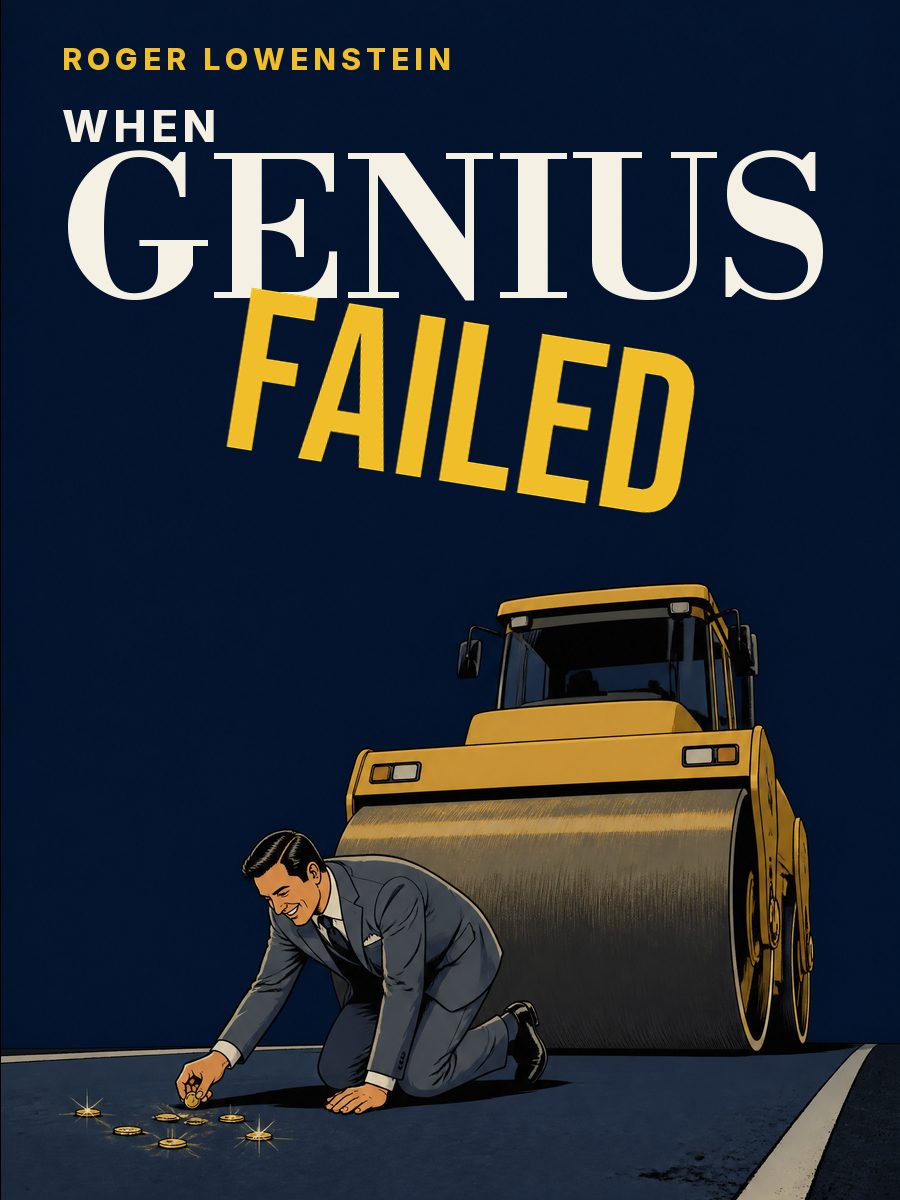 When Genius Failed: The Rise and Fall of Long-Term Capital ManagementRoger Lowenstein
How did a fund with two Nobel laureates on its team lose almost everything in a few weeks? Roger Lowenstein rebuilds the story of Long-Term Capital Management from internal documents and interviews: from the brilliant years to a rescue the Federal Reserve had to arrange. It is a book about leverage, about models that…
Question 1 of 5
How did the fund make money on its most famous trade with two bonds?
Show the answer
Right answer: By betting that the gap between the two bonds would narrow
The fund bought the older bond and sold the newer one. It didn't care where rates went: it won as the two prices converged.
Question 2 of 5
You borrow twenty-five times your own money at a safe rate. What's the danger, according to the book?
Show the answer
Right answer: A four percent price drop can wipe out your capital
Leverage magnifies both profit and loss. At twenty-five to one, a small drop in prices eats up all your own capital.
Question 3 of 5
The model promised the fund would lose no more than 35 million dollars a day. What was its main weakness, according to Lowenstein?
Show the answer
Right answer: It relied on a calm past and couldn't see human panic
The model rested on calm years and treated the market like a roll of the dice. But the market is made of people who get scared and all run the same way.
Question 4 of 5
In many ways the partners were right about prices. Why did the fund still go broke?
Show the answer
Right answer: With huge debt, it couldn't afford to wait until proved right
Lenders demanded collateral, there was no cash, and huge positions can't be sold quietly. Being right in a year doesn't save you from ruin in a week.
Question 5 of 5
Why does Lowenstein see the Fed-assisted rescue of the fund as a dangerous precedent?
Show the answer
Right answer: The market might decide a big debtor won't be left to fail
This is moral hazard: when someone else pays for the consequences, risk becomes easier to take. The Fed put in none of its own money, but it brought the lenders together.
Want all of the book's key ideas? Read or listen to its retelling in Livria.