
The key ideas
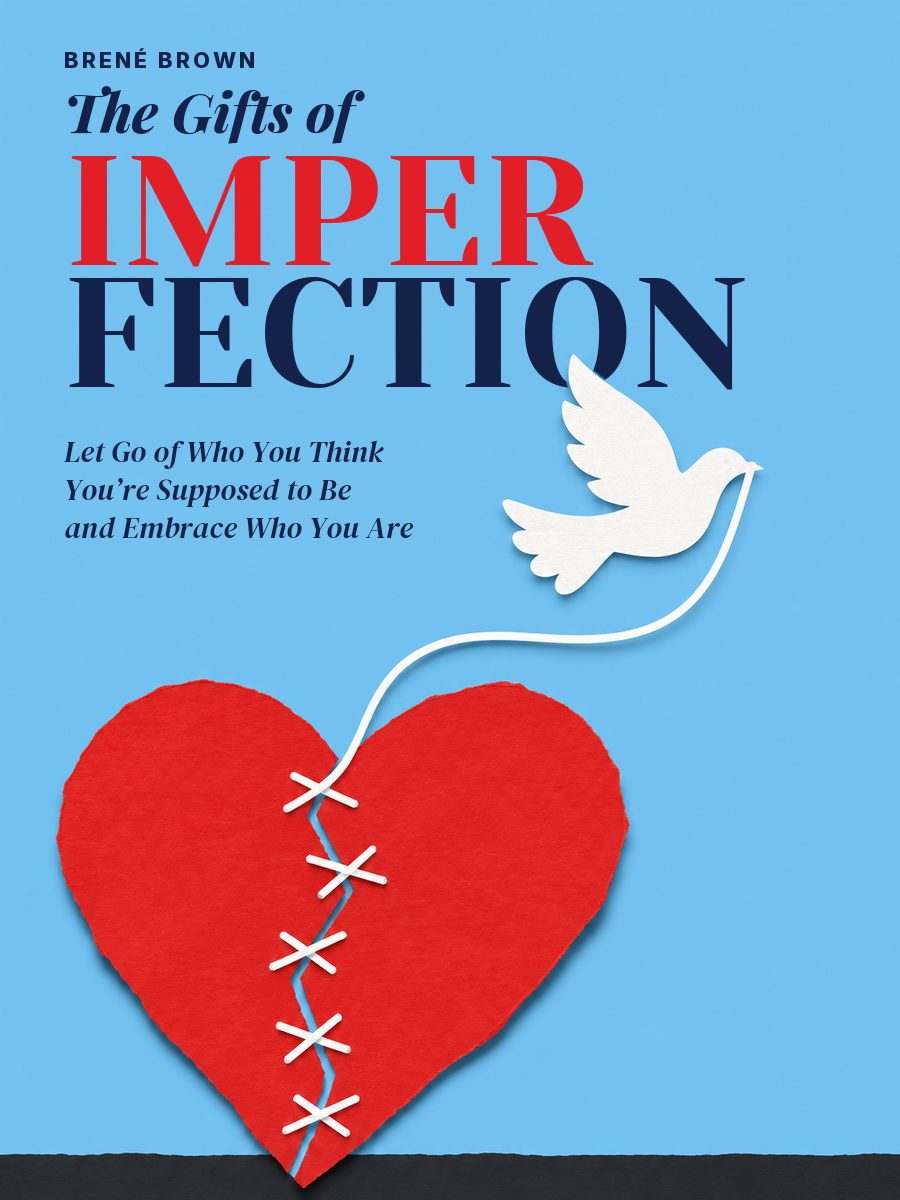
The Gifts of Imperfection: Let Go of Who You Think You’re Supposed to Be and Embrace Who You Are
Why does someone who does everything right still live with the feeling of “I’m not enough”? Brené Brown gathered thousands of stories from people who live calmly and joyfully, and to her surprise she recognized herself in the list of what gets in the way of living like that. This book is about what keeps us from living wholeheartedly: chasing approval, shame, the fear of looking silly, and exhaustion worn as a badge of honor.
Who it is for
For anyone used to earning love by what they do, who is tired of pleasing people and fitting in and wants to stop proving their worth.
We are worthy of love and belonging now. Right this minute. As is.
Two columns on a poster
In November 2006, the researcher Brené Brown was sorting through thousands of stories from people who, as she puts it, live Wholehearted lives: calmly, joyfully, without an endless race. She split the words from these stories into two columns. The first held worthiness, rest, play, faith, intuition, joy, gratitude and creativity. The second held perfectionism, numbing, the need for certainty, exhaustion and the wish to fit in.
Brown expected to recognize herself in the first column: she worked hard, followed the rules and raised her children strictly by the book. Instead, she recognized herself in the second. She drew a line under it, wrote the word “me,” and later called the year that followed her “breakdown spiritual awakening.”
The book The Gifts of Imperfection grew out of that data. Its main lesson: knowing yourself matters, but treating yourself with kindness matters even more. Living Wholeheartedly, in Brown’s view, means waking up with the thought: no matter what gets done and how much is left undone, I am enough.
Courage, compassion and connection with people are what she calls the gifts of imperfection. You don’t receive them once and for all; you practice them every day, and our slip-ups are exactly what give us the chance. Ahead are five stories from her ten guideposts.
Worthy now, not “when I lose weight”
Brown lists the conditions people set for themselves without even noticing: “I’ll be worthy when I lose twenty pounds,” “when my parents finally approve,” “when I make partner,” “when I can do it all and look like I’m not even trying.”
Until the list is done, a person, in Brown’s words, tries to earn the right to love: works hard, pleases, proves and polishes themselves to a shine. Her conclusion from the interviews is blunt: worthiness doesn’t have prerequisites. What sets apart the people who feel loved is just one thing: they believed they were worthy of love right now.
This leads to her key distinction. To fit in is to size up a situation and become whoever will be accepted there. To belong is to show up as yourself. That’s why, as Brown sees it, you can’t get belonging by adapting: you’re accepted, but what’s accepted is the mask. And our sense of belonging, she writes, can never be greater than our level of self-acceptance.
About the author
Brené Brown is an American researcher and a professor at the University of Houston. She studies shame, fear and vulnerability through interviews: over ten years she has gathered thousands of stories.
All books by this author: Brené Brown
Terms from the book
- Perfectionism
- Ashley
- Laura
- compassion
- boundaries
- Wholehearted: The author’s expression, not a scientific term. Brown uses it for a life in which a person starts from the belief that they are already worthy of love, rather than earning it.
- numbing: The author’s image: the habit of dulling unpleasant feelings with food, work, busyness or the phone.
- breakdown: Brown ironically calls the year of change after her discovery a “breakdown spiritual awakening”: to her it felt like a breakdown, and her therapist called it an awakening.
- The Gifts of Imperfection: The title of the book and its central image: courage, compassion and connection with people. These gifts grow when a person lets themselves be imperfect.
- guideposts: The book’s name for its ten practices of Wholehearted living. Each one is made of something to cultivate and something to let go of.
- belonging: The feeling of being part of something larger than yourself. According to Brown, it’s only possible when a person comes into a group as themselves instead of adapting to it.
- fit in: In the book: to size up a situation and become whoever will be accepted there. Brown sets this against belonging.
- shame storm: The author’s image: moments when shame washes over you so hard that you can’t remember a single good thing about yourself.
- shame: In Brown’s definition, the painful feeling that something is wrong with you and that you are therefore unworthy of love and belonging.
- Stuart Brown: An American psychiatrist who studies play, the founder of the National Institute for Play.
- Steve: Steve Alley, Brené Brown’s husband.
- Ellen: Brené Brown’s daughter.
- department store: A large store with many departments: clothes, shoes, cosmetics.
- dig deep: The author’s method for hard moments. Instead of gritting her teeth and pushing through, she gets deliberate, gets inspired and gets going.
Similar books
- Daring Greatly, Brené Brown
- Rising Strong: The Reckoning. The Rumble. The Revolution., Brené Brown
- The Happiness Advantage, Shawn Achor
- The Happiness Equation: Want Nothing + Do Anything = Have Everything, Neil Pasricha
- The Happiness Project, Gretchen Rubin
- The How of Happiness: A Scientific Approach to Getting the Life You Want, Sonja Lyubomirsky
- The Human Machine, Arnold Bennett
- The Let Them Theory, Mel Robbins
- The Goal: A Process of Ongoing Improvement, Eliyahu M. Goldratt, Jeff Cox
- The Good Enough Job: Reclaiming Life from Work, Simone Stolzoff